A Poet's Double Life

For poets working outside the literary world.


2 Comments

Lessons Learned from a April Poem-a-Day Challenge Veteran


april2013

Last month was the 4th year I celebrated National Poetry Month by participating in the April Poem-a-Day (PAD) Challenge. I wish I could say writing 30 poems for 30 days gets easier with time, but it is marathon writing experience. There’s a point in the month where I hit the wall and I have to push through. Fortunately, I’ve got a crowd of supporters whose words of encouragement keep me going until the end–which brings me to the first lesson from this year’s challenge:

1) Let MORE people know you’re doing the Challenge: Back in November, I made a public promise to share the April PAD poems on this blog and I’m so glad I fulfilled that promise. Posting the poems here introduced me to a lot of other poets and lovers of poetry who left comments or started following my blog. And I started to follow a few new blogs myself.

2) Work can be your muse: As a double-life poet, I didn’t have time to start writing once the prompt went up on the Poetic Asides blog; I had to get through an 8-hour work day first. Fortunately my “work husband” and other colleagues were more than happy to help me figure out what to do with the prompt, particularly the <blank> prompts that came out on Thursdays. My colleagues filled in the blank for the poems on day 4 (Hold that Hot Potato) and on day 11 (In Case of a Wild Hair), and work was clearly the subject of Day 15 infested poem, “During the Legislative Session” (my boss’ favorite).

3) Play with form: Sunday prompts in April were the time to use a specific poetic form. I was introduced to the sevenling, the senryu, and the shadorma, and wrote my first real sonnet (iambic pentameter and everything)! I also wrote in two of my favorite forms–the villanelle and the pantoum–and tried a bop. Writing in form makes me focus on the essence of the poem, which helps me tighten the language and imagery.

4) Be prepared to write anywhere: I usually have my journal, but I don’t  carry it with me all the time. Bringing a mini-notebook helps, so does the pad of scratch paper at the office and the iPhone Notes app. Inspiration will come at any time–even at milongas!

5) You will lose sleep: I promised myself I wouldn’t go to sleep before I sent out a poem, which meant some nights I didn’t get to bed until after 2 AM (remember those milongas?). Only once did I fall asleep while composing a poem, but I woke up at 1 AM to finish it. As much as I love sleep, sacrificing a few hours was worth it. Besides, May is a great month to catch up on sleep!

 If you have any lessons learned from the PAD challenge, let me know by leaving a comment.

3 Comments

My Half Dozen


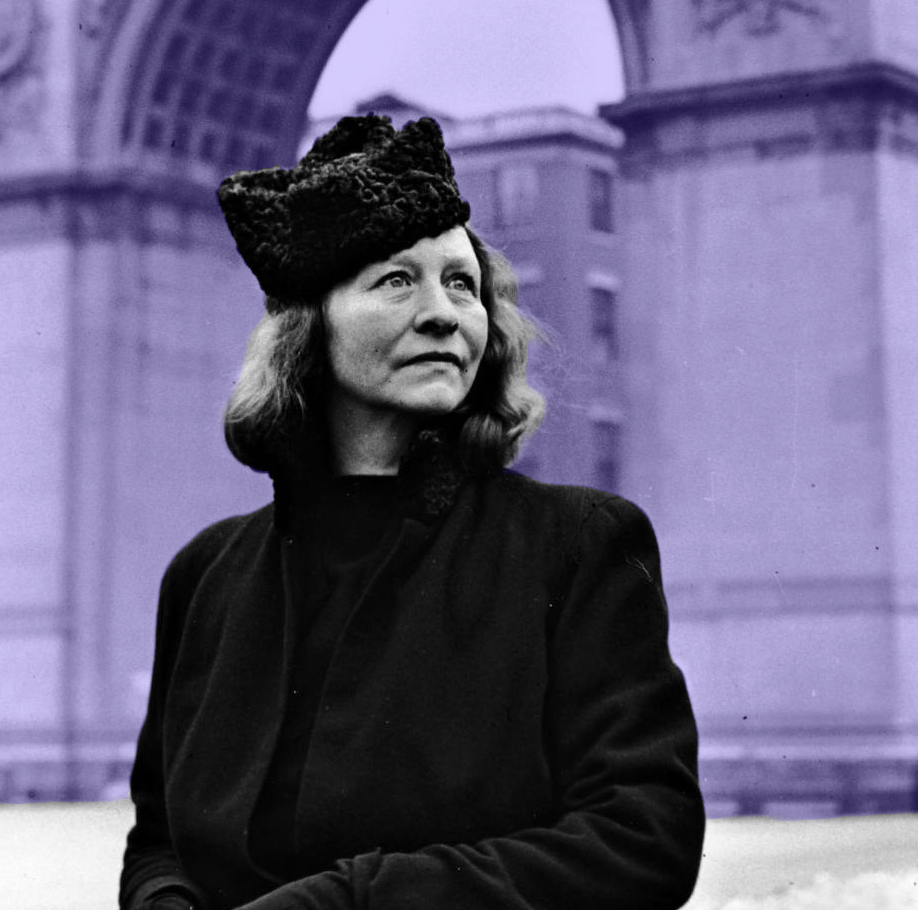
Sou’wester recently accepted one of my November Poem-A-Day poems for it’s upcoming issue featuring women writers. As part of the issue, they have asked all contributors to list “Her Half Dozen”, the six women writers who have influenced their writing the most.ednavincentmillay_purple_1 After sleeping on it (and being awakened at 3 AM with the list fully formed), I decided to share the women writers who have influenced my writing the most:

Edna St. Vincent Millay (February 22, 1892 – October 19, 1950): The Selected Poems of Edna St. Vincent Millay was the first book of poetry I ever owned. It was a gift from someone I was trying to get to know and who was trying to get to know me. Her poem, “The Interim,” about the death of her husband, inspired me to write my first poem as a way of voicing the grief and loss I had suffered in 2003.

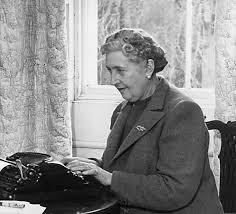
agathachristieAgatha Christie (September 15, 1890 – January 12 1976): The British crime writer is the only prose writer on my list. Agatha Christie inspired my love for reading. Growing up, I devoured every Agatha Christie book I could get my hands on, and started reading other British female mystery writers like P.D. James and Martha Grimes after learning their writing was influenced by Christie. Her stories piqued my interest human behavior because I wanted to understand what drives a perfectly normal person to kill another.

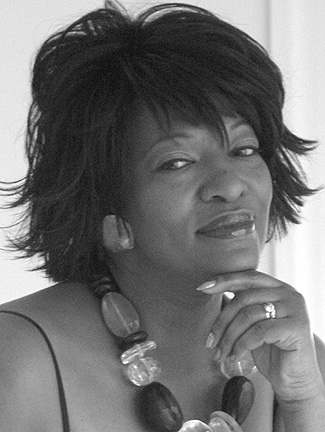
Rita Dove (August 28, 1952): Her laurels speak for themselves: appointed the U.S. Poet Laureate from 1993–1995; became the secondritadove African American to receive the Pulitzer Prize for Poetry in 1987; served as Poet Laureate of Virginia from 2004–2006; and edited The Penguin Anthology of 20th Century American Poetry, published in 2011. And she’s an avid ballroom dancer! Needless to say, Dove is my poetry role model.

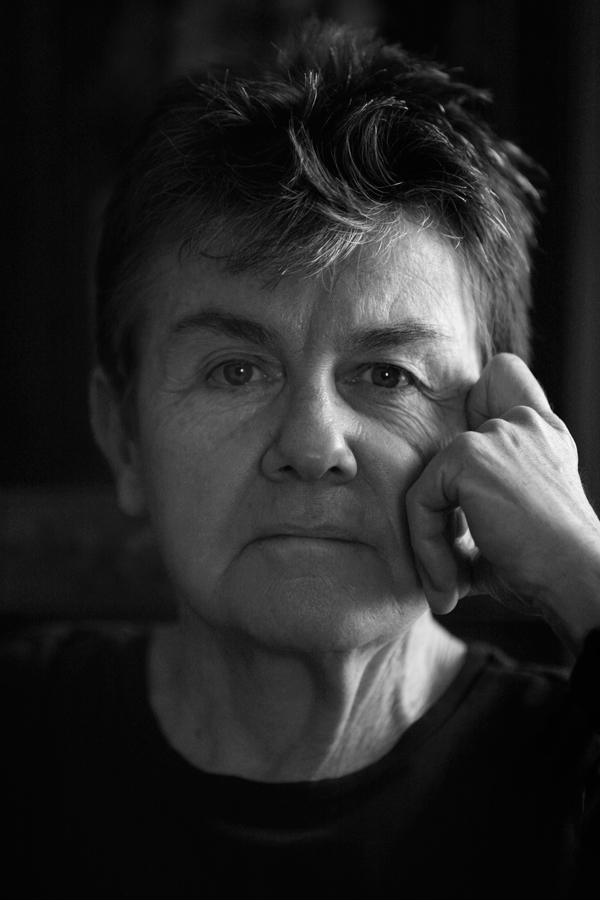
kay-ryan2Kay Ryan (September 21, 1945): Ryan was appointed the 16th U.S. Poet Laureate in 2008. After reading her collection, The Best of It: New and Selected Poems, I stopped feeling bad about myself for writing short poems. I love how Ryan can bend a sentence to her poetic will.

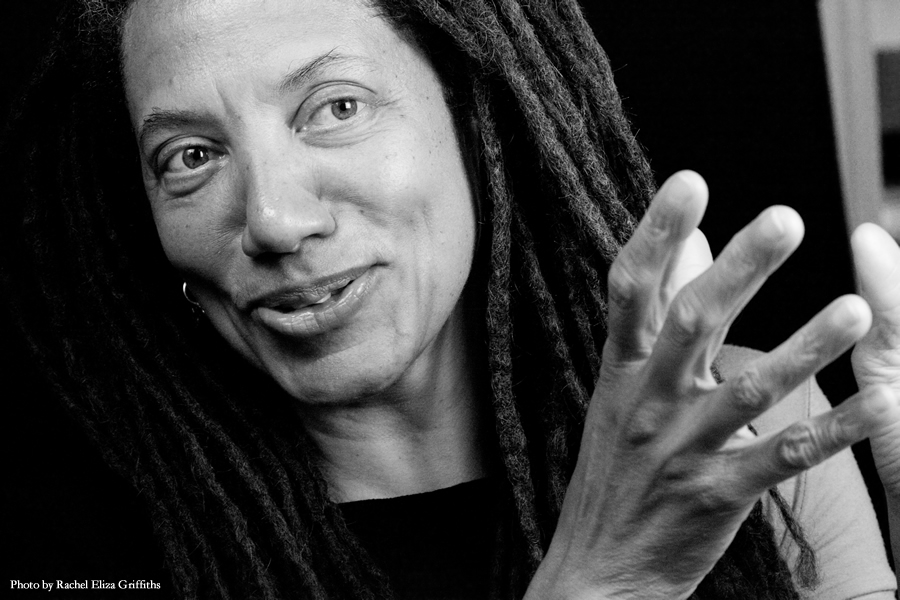
Nikky Finney (born Lynn Carol Finney on August 26, 1957): Nikky Finney was one of those poets I had heard about but had never read—even after she won thfinney3e 2011 National Book Award for her collection, Head Off & Split. Last June at the Cave Canem retreat, I had the fortune of not only meeting her, hearing her read, and seeing her interview Nikki Giovanni, one of the women who influenced her as a writer, but also learning from her how to weave the personal, local, and historical together in a poem.

Leslie Ullman (April 28, 1947): Leslie was my creative thesis advisor for my last semester at VCFA. After working with men for the first three semesters, I felt I needed a woman’s touch to help me give birth to the collection of poems for my thesis (Fun Fact: Leslie leslie_ullmanwrote a poem titled, “Midwife”). When I was completely stressed out trying to finish the thesis and juggle work responsibilities, Leslie advised me to stop doing what was stressing me out—even if that meant I had to stop writing, which it did. Her calm and grace were exactly what I needed in a moment of panic.

Who are the women writers who influence and inspire your work?


6 Comments

Lessons from a Writer’s Conference Virgin


I returned Saturday evening from my first professional conference as a writer. Along with 11,000 other poets and writers, I went to Boston to attend the Association of Writers and Writing Programs (AWP) conference March 6-9, 2013. Because of my double-life responsibilities, I knew I couldn’t stay the whole time. So I made the most of Thursday and Friday at the AWP conference, which was more than enough time to be immersed in the atmosphere and move my poetry career forward.

Talk to AWP veterans: Patrick Ross, double-life creative non-fiction writer and soon-to-be-VCFA, alum, has attended the conference five years in a row! His pre-AWP post on his blog, The Artist’s Road, about recommended that attendees ask themselves three questions:

  1. What is it I most want to get out of this year’s AWP?
  2. What is the one thing I absolutely cannot miss?
  3. What is one area in which I want to grow as a writer?

For me the answers were: 1) ideas of how I could contribute to AWP as part of my professional development, 2) Cave Canem on-site and off-site readings, and 3) teaching and supporting other poets. These answers  guided the panels and readings I attended and increased my satisfaction with the two days I spent in Boston.

Read the panel descriptions: The  112-page AWP conference program could not be carried around with any modicum of grace. I relied a lot on the 20-page conference planner to decide where to be, but often, the title didn’t match the description. For example, I thought the “Engaging with Science: Poetry and Fiction” panel would give me practical ways to collaborate with science organizations, but it ended up being a reading of science-related work. Interesting, but I wasn’t going to learn anything new. Also, the panel descriptions list the participants, which is a great way to meet your favorite poets and get your books signed.

Bring your own books to be signed: If my Wednesday night flight had not been cancelled, I would not have thought to bring some of my own books with me. As a result, I got my copy of Native Guard signed by the author, Natasha Trethewey, the current US Poet Laureate. If I had read the panel descriptions before I got to Boston, I would have known to bring my Tracy K. Smith and Lyrae Van Clief-Stefanon books. I did bring my Yusef Komunyakaa book, but was too shy to approach him for a signature. Next time, I won’t be (at least I hope not).

Find a home base: For me, it was booth 314 in Exhibit Hall A, Vermont College of Fine Arts. Here I exchanged the University of Tampa lanyard to one that promoted my MFA program, picked up my “Ask Me About VCFA” button, and had all the maple syrup candy I wanted. If I stood in place for five minutes, some VCFA student, alumni, or faculty member would inevitably wander by, followed by kisses and hugs and discussions about writing.

Have your business cards handy at all times: The one mistake I made was leaving my poet calling cards in the hotel after 6 PM. For some reason, I thought I was off-duty after dinner.  I’ve learned that there are more opportunities to network after the panel discussions end. The AWP conference has scheduled readings that end at 10 PM and after-hours gatherings until midnight. My VCFA poet-friend, Victorio Reyes, asked me to be his +1 for the by-invitation only VIP Reception on Friday night. Not only did I get to stand 10 feet away from the Inaugural Poet, Richard Blanco, I met AWP President, Judith Baumel, and had a lively discussion with one of the new board members, David Rothman, about how I could contribute to AWP! Even though I left my cards I the hotel, I made sure to send follow-up emails and Facebook and LinkedIn invitations to people I met at the reception—lessons I learned from my non-literary career.


2 Comments

After “One Love”


Last week on Valentine’s Day, over 2,200 14-word poems were handed out throughout the Triangle as part of the 14 Words, One Love event. I wrote over 40 poems in less than two weeks—and was ecstatic to learn we had surpassed our original goal by 800 poems!

And then I hit the wall. Runners often talk about the runner’s high—that rush of adrenalin that keeps them going during a marathon. The 14-word event definitely fed all the good poetic energy and reading and commenting on other people’s poems increased that positive vibe. That energy stayed with me throughout Valentine’s Day when I handed out poems to my office colleagues, distributed poems at an off-site meeting, and made special home deliveries to a few of my friends. But afterwards, I felt rung out like a worn rag. I couldn’t think about picking up a pen, let alone convincing my mind to conjure up an image to bring to life on the page.

That’s probably why it has taken two weeks to get back in the blog saddle. I had to re-group, feed the space that opened up after the “one love” was gone. So I turned to poetry books: first, to Rabindranath Tagore’s Final Poems, and then, to Sharon OldsSelected Poems. I spent time memorizing one of my favorite poems by Olds, “Topography,” which is now the fourth poem I know by heart (more on that later). Monday’s visual prompt for Living Poetry ended the drought.71752_518868581492385_1203357513_n

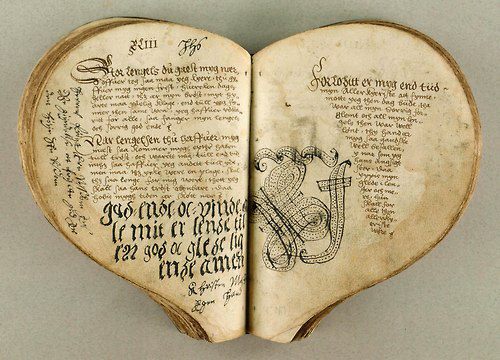
Danish “Heart Book”

Closed, it is a question
mark missing the finality
of the dot that holds
its fragile curve in place,
half of what it could be.

Opened, a great yearning
lives in the curlicue of each letter,
yellowed pages burdened by the black
ink of a centuries-old plea: for misery
to end and turn into good.

After that, two other poems I had jotted down in my journal and on my iPhone finally started to take shape on the page. Now I feel like I’m back on track.


3 Comments

Black * Woman * Professional


Manuscript Section 1That’s the title of the poetry manuscript I submitted to a book contest one day before the January 31st deadline. On the one hand, assembling the manuscript was exactly like organizing the creative thesis for my MFA program—printing out every poem, creating piles of poems with a similar theme, ordering the poems in each themed pile, putting the themes in the order they should be read.  That part was easy.

The hard part was changing my mindset from a “hoop-to-jump-through-in-grad-school” to a “poetry-collection-someone-might-read-one-day.” Making that switch meant I had to treat the manuscript as if it were already a published book. These days, many poetry and prose books have sections break up the reading and the poems or chapters that follow. Some are as simple as Tracy K. Smith’s Life on Mars—One, Two, Three, Four. Others provide more information about the poems or chapters that follow. For example in Casual Vacancy, J.K. Rowling uses quotes from the Local Administration Manual to give a clue to what to expect in the next set of chapters. Having just finished that book on my Kindle Fire, I looked for something to help me tie the sections and the book together.

Then I remembered the book, Our Separate Ways: Black and White Women Struggle for Professional Identity. I read this book about 10 Our separate waysyears ago, and then again in 2011, in my critical thesis semester. Flipping through it, I realized the chapter titles could organize the themes of my collection, and then, chose quotes from the book that connected to the poems:

  • Fitting In (I feel like a guest in somebody’s house.”)
  • Work Isn’t Everything (The thing that’s on every single black women’s mind is the whole issue of relationships.”)
  • Their Father’s Daughters (My life is different from my mother’s and father’s; theirs was a different time.”)
  • The Racialized Self (I experience myself as being exotic and mysterious to most white people.”)

No matter what happens with the contest, I’m satisfied with how my first poetry collection turned out.


7 Comments

In Service to Poetry


living poetry leaf_2I’ve been a member of the Living Poetry Meetup group since December 22, 2008—7 days after the group was started—and a co-organizer for almost 3 years. During that time, I’ve organized discussions with local poets, facilitated the poetry book club and critique group, recorded several podcasts, sent out poetry prompts every Monday morning, and volunteered for poetrySpark. At times, my Living Poetry responsibilities have been hard work and have taken time away from my own writing, but those times were minimal, and even secondary, to the pleasure of meeting new poets, hearing old, new, and new-to-me poems, and discussing our craft.

But I never thought of it as a service to others—until yesterday. At Living Poetry’s 4th Anniversary Party, double-life poet, Anna Weaver (who took the bronze in our Best of Living Poetry 2012 contest) thanked the Living Poetry organizers for all that we do for poetry in the Triangle. Someone else chimed in and called Living Poetry, “A one-stop shop for poetry in the Triangle” (which should become our new tagline). I must admit, it was a little overwhelming to be thanked for promoting, developing, and supporting poetry—something that I absolutely love to do. I guess if you’re doing something you love, it doesn’t seem like a burden.

And while I’m on the subject of thanking people who act in service to poetry, I’d like to give special thanks to my co-organizers, Bartholomew Barker, Tara Lynne Groth, and Angelika Teuber, who make  it fun and cool to be a poet!


7 Comments

How Poetry Events Happen


Tonight, I will read my poem “Transit of Venus” at the North Carolina Museum of Natural Sciences as part of the weekly Science Café Talks. The actual planning for this event started in November, but the forces that brought everything together started way before that.

responsibilitytoaweLet’s go back in time to July 2011, the beginning of my last semester in my MFA program, when I was developing a lecture on poets with non-literary careers. I knew about Wallace Stevens and William Carolos Williams and was told about Wendell Berry. My list of poets was heavy on the testosterone side, so I decided to Google search for female poets I could include. I came across Rebecca Elson—an astronomer and a poet—found her collection, A Responsibility to Awe, at UNC Davis Library, and was reading it on the DRX (Durham-to-Raleigh Express) bus one morning. Back then, I preferred to sit in the back of the bus on the driver’s side. Next to me sat another regular DRX rider, a science professor at NC State, who leaned over and asked me about the book I was reading. Once I told him that the author was a astronomer, the conversation took off from there (he was a physicist).

Fast forward to June 2012—the transit of Venus viewing event at the Natural Resource Center, the newest addition to thetransitofvenus Museum of Natural Sciences in downtown Raleigh. I watched this historic phenomenon of the planet Venus crossing between the Earth and the Sun with tons of other people donning protective glasses on the rooftop of the adjacent parking lot, knowing none of us would be alive see the next occurrence in 2117. Two weeks later—the last day of Cave Canem retreat—I wrote a poem about it.

Fast forward again to November 2012—the morning wait for the DRX bus. I see my physics professor friend, who tells me that the Museum of Natural Sciences staff sent out a call for topics for their weekly Science Café talks and that he suggested a reading on poetry and science—Would I be interested? Well, of course! I’m only the co-organizer of one of the greatest poetry groups in the Triangle (I didn’t say that exactly, but it was close).  And the Living Poetry members did not disappoint. I sent out the call for science-related poems on the 13th, and two weeks later, I had over 50 poems in my inbox. I selected 10 for the museum staff to review and they chose five for the reading.

Bringing it home to today—January 24, 2013 at 7PM, Poetry Scope, an evening of science through the lens of poetry.


3 Comments

Why I Prefer the Double Life


Another double-life poet sent me an article about the day jobs of writers, using T.S Eliot as an example. Eliot worked as a bank clerk for Lloyds Bank in London, and as the blogger puts it, “he was really good at his day job.” The blogger goes on to admit that as a writer with a day job himself, he’d rather imagine that every writer is making a killing off of writing instead of needing to have a day job.

This, of course, got me to thinking: “Would I rather make a living from poetry or live the double life?” I can’t answer this question without considering the fact that the primary way I could make a living from poetry was if I taught at a university. I could have gotten an academic job after I got my PhD in 1998, but decided that life was not for me. After I got my MFA, I get the same question. I have the same answer: “Hell no!”

So then, what makes me want to continue to have a non-literary career, one that by its very nature of using my analytical mind, takes my mental energy away from something I love to do? Because I still get something good from my day job, things I can’t get with poetry alone:

1) Affords my current lifestyle: Yes, the money, health insurance, and retirement benefits are very important to me. I’m very thankful to have a job where I can afford the poetic life—writing retreats, workshops and conferences, submission fees for poetry contests, and all those books!

certificate_achievement_award2) Satisfies my need for praise: There’s no pat on the back or “atta girl” every time I finish a poem. And getting rejection letters after 9 out of 10 publication submissions is the norm. As a poet, the most praise I could hope for is imagining that someone will read my poem and smile or pause with hand over heart or whatever one does when one reads a good poem. In the meantime, my non-literary career comes with professional recognition awards, annual performance evaluations, staff meetings where we applaud each other for doing a good job on presenting a report, and more often, verbal and written expressions of gratitude for completing a task while the project is still going on!

3) Allows me to interact with colleagues: Writing poetry (or anything else for that matter) is such a solitary venture. Sure you can gather a group of friendly poets once a month for a critique group or book club discussion, but the work of poetry happens when you’re alone with the page. The words show up, but sometimes, they are not very good. And that muse who is supposed to contribute the inspiration can be a very flaky co-worker—showing up late or not at all, making you do all the work and stepping in at the last minute to take all the credit. My real colleagues are not like that at all. We work on teams and pitch in to get a project done. I like working in an office where we can bounce ideas off each other, find a sympathetic ear to vent our frustrations, and crack ourselves up around the break room table.

Not to mention the endless poem ideas that emerge from the whole experience!


2 Comments

To Be or Not to Be. . .Separate


The fundamental question for a double-life poet is, “Should I keep poetry separate from my working life?” Wallace Stevens turned down an appointment as the Charles Eliot Norton Professor of Poetry at Harvard because he didn’t want to be forced to retire from his job as an executive at The Hartford. William Carlos Williams felt being a doctor and being a poet were “two parts of a whole” and often scribbled poems on the back of prescription pads.

I faced this question while updating my LinkedIn profile. It’s funny how the most innocuous tasks make you rethink your whole raison d’être. Anyway, it’s been almost a year since I graduated from VCFA, but that information wasn’t on the résumé. Neither were my writing and presentation skills mentioned anywhere and none of my recent poetry publications were listed. Isn’t my MFA important to me? I’ve only mentioned it in 10 of the 40+ posts I’ve written for this blog. And don’t I want to use my writing and presentation skills more? Start to blend my double lives more?

And then that ultimate negating phrase popped into my head, “Yes, but”

Yes, but what type of message is that sending?

Yes, but this is a professional website and poetry doesn’t fit.

Yes, but the poetry stuff and work stuff should be separate.

Adding this information was simple – selecting the school, degree, and year from the drop-down menu, typing the words,LinkedIn Profile “writing” and “publication” in the summary section, and copying and pasting the link to my latest publication. I mean, that’s what makes me unique, right? That I like to tell stories with data, that I like to write, that being a poet in a professional world, I wrestle with and simplify complexity, have a more acute sense of empathy, am creative, and can infuse life with beauty and meaning. And just like that, my poetry and non-literary career became one.

I look forward to the day when poetry and my non-literary career can peacefully coexist in my every day world and not just on my LinkedIn résumé.


3 Comments

Year in Review 2012


2012 YIR

I’m taking a page from the playbook of my poet-friend and blogging guru, Tara Lynne Groth of WriteNaked, and doing the hip thing: a post what I learned and accomplished this year.

What I learned is simple: Write! Write! Write! Submit! Submit! Submit! ‘Nuff said.

Now—on to the month-by-month highlights of 2012

January: Graduated from Vermont College of Fine Arts with my MFA in Writing.

February:  Participated in peer review with fellow VCFA alum. Made 2nd presentation for the job.

March: Worked like crazy. Not much else. 😦

April: Wrote 30 poems for April Poem-A-Day Challenge. Turned 40!

May: Attended Raleigh Review writing workshop with Dorianne Laux and Joe Millar. Made 3rd presentation for the job.

June: Attended 17th Cave Canem Retreat.

July: Launched this blog, Poet’s Double Life.

August: Attended a professional conference in Chicago, wrote poems, and took tons of photos.

September: poetrySpark! “Professional Disagreement” published in Mused: BellaOnline Literary Review.

October: Worked like crazy and got an “exceptional” annual performance rating. Attended a new open mic.

November: 29 poems for November Poem-A-Day Challenge. Five years at the job!

December: Three April poems published in the Best of Fuquay-Varina Reading Series anthology. “The Truth About Fire” accepted in Pedestal Magazine’s December 2012 edition.

I’m still working on my New Year’s resolutions for an upcoming post!