A Poet's Double Life

For poets working outside the literary world.


Leave a comment

April Poem-a-Day Challenge, Day 2


Prompt (Two for Tuesday): Write a bright poem. Write a dark poem.Bright_Moon_in_the_Dark_Night_by_nightmares06

Bright/Dark

We worship suns,
shoot for stars,
land on moons.
Light shapes our days
adjusts our moods,
drives us to walk down
life’s cold and lonely
tunnels, led by outstretched
hands, stumbling over
our own feet. We’d rather seek
hope’s pale flicker than live
in a darkness that obscures
our vision, forces us
to hands and knees
in its presence, until
we are frozen in place
by the fear of solitude
and the internal mysteries
we long to embrace.


2 Comments

April Poem-A-Day Challenge: Day 1


For the fourth year, I am participating in the Poem-A-Day Challenge in celebration of National Poetry Month. Along with other Living Poetry members, I use prompts from the Poetic Asides blog for the 30 days. As I promised myself, I am going to share my poetry more by posting the PAD challenge poems to the blog. I hope you enjoy!

Prompt: A new arrival

When Boredom Comes

She slips in under the doorjamb, dragged in

by the last crossed off item on your to-do list.

She loosens her clutches and plops down

silently on your clutter-free desk. She triesyawn2

to be helpful—rearranging the office supplies

to your liking: shifting the tape dispenser to the left

side then back to the right, placing the stapler

next to it—no, behind it—separating paper clips

from binder clips, sorting and counting each type

by size. You watch her straighten and re-straighten

pictures on the wall, line up chachkies, knick-knacks,

and doodads along the tops of bookcases, make

the books stand erect and alphabetized. She’s given up

dusting, but doesn’t mind a mop and broom or washing

a window or two. But before long, she’s done everything

she can and leaves you alone to finish what she started.

~Pamela L. Taylor © 2013


1 Comment

March: In Like a Lion, Out Like a Lion


march-lion1March was a busy time for me—this post is only the 4th one I had time to write this month. I did manage to blog about the most important things that happened in March: AWP and the six women writers that inspire my work.

But this month brought a lot of transition at work—moving into a new role where I lead projects and manage people. I am also spearheading a process to compile ideas for the next 15 projects we will complete over the next two years. I am no longer behind the scenes, but rather, have become a point-person to answer questions from my colleagues and do special projects for my boss, including being the staff support to the big bosses. We are also interviewing for four positions, so I spent a lot of time combing through 50+ applications packets to narrow down the few who might be my future colleagues.

I didn’t worry about writing in March because I knew I would need all that inspiration for April’s Poem-a-Day Challenge. But I did attend three open mics, including a new event at Matthew’s Chocolates in Hillsborough. With little emphasis on writing, I decided to focus on reading a novel—The Tiger’s Wife by Tea Obreht was chockfull of imagery and rich language, and had an intricate story line. I was so enamored by this book, I posted quotes as my Facebook status and convinced five other people to read it. I finished up Shakespeare’s Sonnets, Selected Poems by Sharon Olds, and Final Poems by Rabindranath Tagore and checked out several from my favorite library:

Of course with all that reading material for inspiration, two poems found their way out, “Childless” and “Bicycle.” Today and tomorrow, I’ll be working to edit these and other poems for March 31st submission deadlines and preparing my manuscript, Black.Woman.Professional, for submission to the Cave Canem  first-book award contest.

And I got word that my science poem, “Transit of Venus,” won second place in the Carolina Woman Writing Contest! Suddenly, I’m feeling a little Helen Reddy: I am woman. Hear me roar!


3 Comments

My Half Dozen


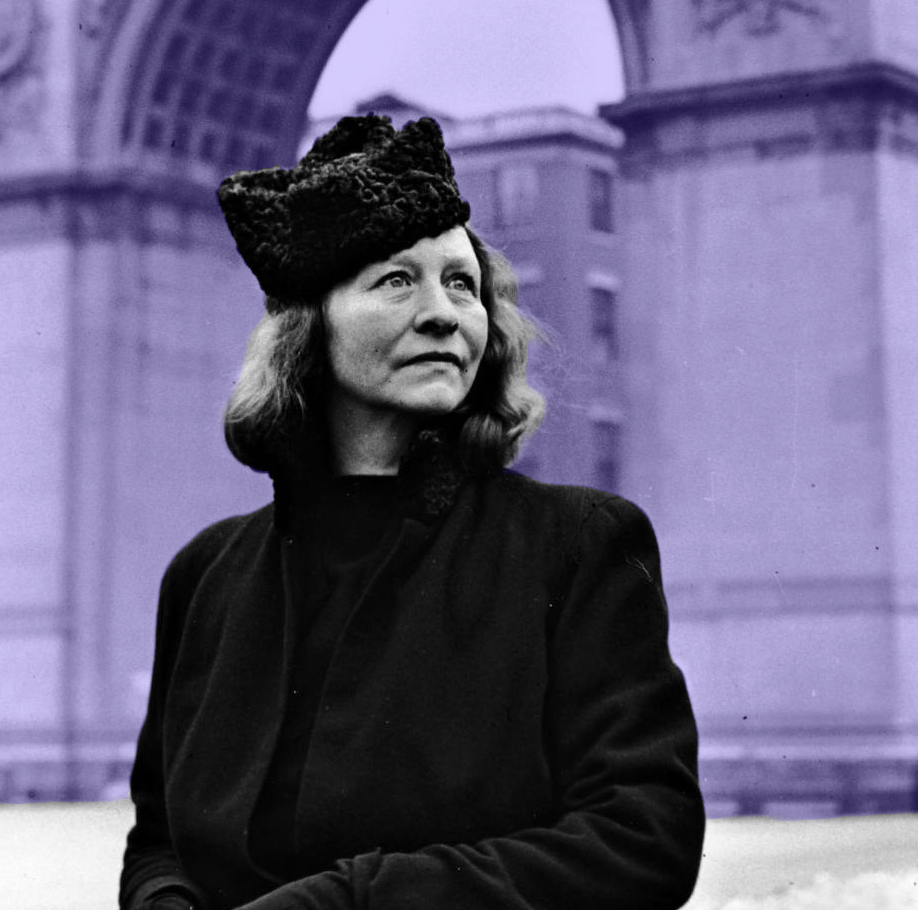
Sou’wester recently accepted one of my November Poem-A-Day poems for it’s upcoming issue featuring women writers. As part of the issue, they have asked all contributors to list “Her Half Dozen”, the six women writers who have influenced their writing the most.ednavincentmillay_purple_1 After sleeping on it (and being awakened at 3 AM with the list fully formed), I decided to share the women writers who have influenced my writing the most:

Edna St. Vincent Millay (February 22, 1892 – October 19, 1950): The Selected Poems of Edna St. Vincent Millay was the first book of poetry I ever owned. It was a gift from someone I was trying to get to know and who was trying to get to know me. Her poem, “The Interim,” about the death of her husband, inspired me to write my first poem as a way of voicing the grief and loss I had suffered in 2003.

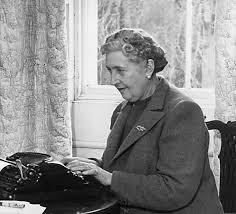
agathachristieAgatha Christie (September 15, 1890 – January 12 1976): The British crime writer is the only prose writer on my list. Agatha Christie inspired my love for reading. Growing up, I devoured every Agatha Christie book I could get my hands on, and started reading other British female mystery writers like P.D. James and Martha Grimes after learning their writing was influenced by Christie. Her stories piqued my interest human behavior because I wanted to understand what drives a perfectly normal person to kill another.

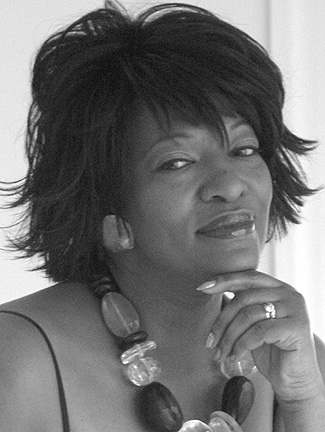
Rita Dove (August 28, 1952): Her laurels speak for themselves: appointed the U.S. Poet Laureate from 1993–1995; became the secondritadove African American to receive the Pulitzer Prize for Poetry in 1987; served as Poet Laureate of Virginia from 2004–2006; and edited The Penguin Anthology of 20th Century American Poetry, published in 2011. And she’s an avid ballroom dancer! Needless to say, Dove is my poetry role model.

kay-ryan2Kay Ryan (September 21, 1945): Ryan was appointed the 16th U.S. Poet Laureate in 2008. After reading her collection, The Best of It: New and Selected Poems, I stopped feeling bad about myself for writing short poems. I love how Ryan can bend a sentence to her poetic will.

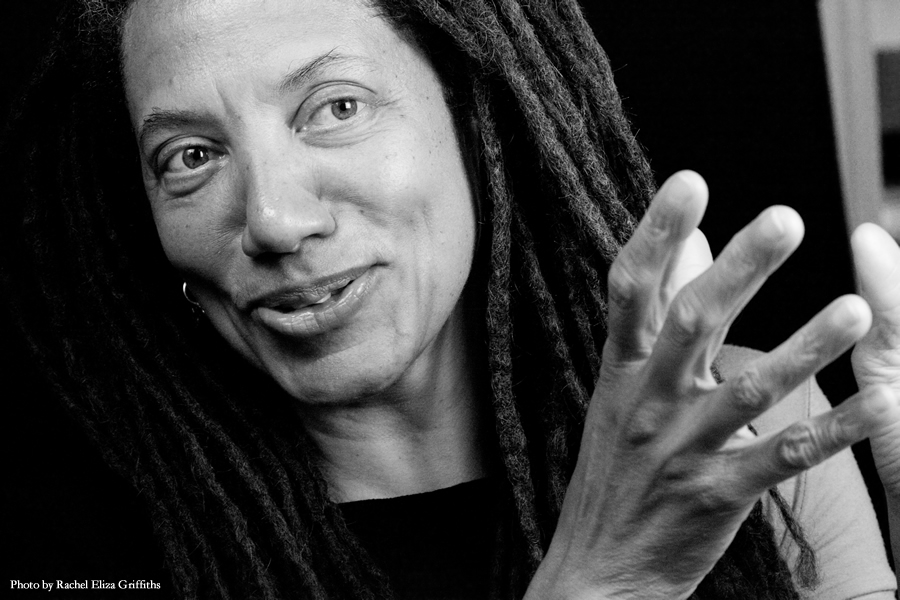
Nikky Finney (born Lynn Carol Finney on August 26, 1957): Nikky Finney was one of those poets I had heard about but had never read—even after she won thfinney3e 2011 National Book Award for her collection, Head Off & Split. Last June at the Cave Canem retreat, I had the fortune of not only meeting her, hearing her read, and seeing her interview Nikki Giovanni, one of the women who influenced her as a writer, but also learning from her how to weave the personal, local, and historical together in a poem.

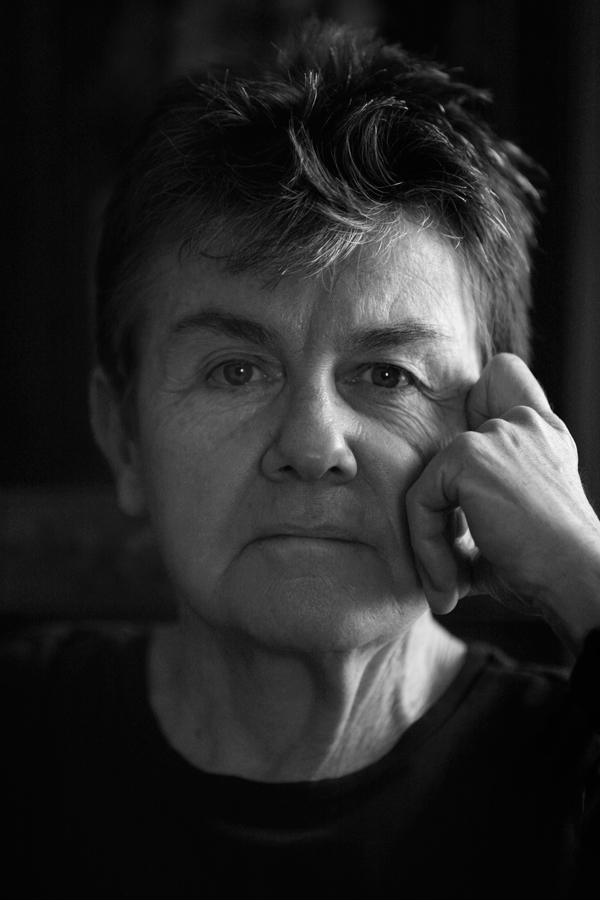
Leslie Ullman (April 28, 1947): Leslie was my creative thesis advisor for my last semester at VCFA. After working with men for the first three semesters, I felt I needed a woman’s touch to help me give birth to the collection of poems for my thesis (Fun Fact: Leslie leslie_ullmanwrote a poem titled, “Midwife”). When I was completely stressed out trying to finish the thesis and juggle work responsibilities, Leslie advised me to stop doing what was stressing me out—even if that meant I had to stop writing, which it did. Her calm and grace were exactly what I needed in a moment of panic.

Who are the women writers who influence and inspire your work?


6 Comments

Lessons from a Writer’s Conference Virgin


I returned Saturday evening from my first professional conference as a writer. Along with 11,000 other poets and writers, I went to Boston to attend the Association of Writers and Writing Programs (AWP) conference March 6-9, 2013. Because of my double-life responsibilities, I knew I couldn’t stay the whole time. So I made the most of Thursday and Friday at the AWP conference, which was more than enough time to be immersed in the atmosphere and move my poetry career forward.

Talk to AWP veterans: Patrick Ross, double-life creative non-fiction writer and soon-to-be-VCFA, alum, has attended the conference five years in a row! His pre-AWP post on his blog, The Artist’s Road, about recommended that attendees ask themselves three questions:

  1. What is it I most want to get out of this year’s AWP?
  2. What is the one thing I absolutely cannot miss?
  3. What is one area in which I want to grow as a writer?

For me the answers were: 1) ideas of how I could contribute to AWP as part of my professional development, 2) Cave Canem on-site and off-site readings, and 3) teaching and supporting other poets. These answers  guided the panels and readings I attended and increased my satisfaction with the two days I spent in Boston.

Read the panel descriptions: The  112-page AWP conference program could not be carried around with any modicum of grace. I relied a lot on the 20-page conference planner to decide where to be, but often, the title didn’t match the description. For example, I thought the “Engaging with Science: Poetry and Fiction” panel would give me practical ways to collaborate with science organizations, but it ended up being a reading of science-related work. Interesting, but I wasn’t going to learn anything new. Also, the panel descriptions list the participants, which is a great way to meet your favorite poets and get your books signed.

Bring your own books to be signed: If my Wednesday night flight had not been cancelled, I would not have thought to bring some of my own books with me. As a result, I got my copy of Native Guard signed by the author, Natasha Trethewey, the current US Poet Laureate. If I had read the panel descriptions before I got to Boston, I would have known to bring my Tracy K. Smith and Lyrae Van Clief-Stefanon books. I did bring my Yusef Komunyakaa book, but was too shy to approach him for a signature. Next time, I won’t be (at least I hope not).

Find a home base: For me, it was booth 314 in Exhibit Hall A, Vermont College of Fine Arts. Here I exchanged the University of Tampa lanyard to one that promoted my MFA program, picked up my “Ask Me About VCFA” button, and had all the maple syrup candy I wanted. If I stood in place for five minutes, some VCFA student, alumni, or faculty member would inevitably wander by, followed by kisses and hugs and discussions about writing.

Have your business cards handy at all times: The one mistake I made was leaving my poet calling cards in the hotel after 6 PM. For some reason, I thought I was off-duty after dinner.  I’ve learned that there are more opportunities to network after the panel discussions end. The AWP conference has scheduled readings that end at 10 PM and after-hours gatherings until midnight. My VCFA poet-friend, Victorio Reyes, asked me to be his +1 for the by-invitation only VIP Reception on Friday night. Not only did I get to stand 10 feet away from the Inaugural Poet, Richard Blanco, I met AWP President, Judith Baumel, and had a lively discussion with one of the new board members, David Rothman, about how I could contribute to AWP! Even though I left my cards I the hotel, I made sure to send follow-up emails and Facebook and LinkedIn invitations to people I met at the reception—lessons I learned from my non-literary career.


Leave a comment

Memorizing Poems


memorize

Every first Saturday, Living Poetry meets at Panera Bread in Brier Creek for our monthly poetry brunch. I love this event because it combines two things I love most: breakfast and poetry. Reading poems always leads to discussions about craft, what it means to be a poet, the relevance of poetry today, teaching, and whatever non sequiturs Don the Brunch brings up. Before I know it the two hours are up.

In the last year, the event has encouraged attendees to “bring a memorized poem”. And I am always up for THAT type of challenge. I grew up reciting lines in church plays and ready to spout off a bible verse whenever asked, even at the dining room table (Jesus wept). Lately, if I find a poem I love, I memorize it. Learning the lines and the exact order of words brings me closer to the poem—as if I am a mechanic looking under the hood of car, disassembling and reassembling the engine. I know I have to get the poet’s word choice and line breaks right in order to convey the same meaning and feeling to the listener.

To memorize a poem, I often start by writing it by hand, which puts me in the mindset of the poet who penned it. Then I read and repeat the first two lines until I know them well, add two more lines, and repeat the first four lines until I can say the block of words with ease. I find it much easier to memorize poems with stanzas and punctuation than one-sentence poems like my favorite from Jack Gilbert:

The Abandoned Valley

Can you understand being alone

so long you would go out in the middle of the night

and put a bucket into a well

so you could feel something down there

tug at the other end of the rope?

In addition to the Gilbert poem, I’ve memorized three other poems: Ego Tripping (There May Be a Reason Why) by Nikki Giovanni, Those Winter Sundays by Robert Hayden, and Topography by Sharon Olds. After the poetry brunch, I plan to add three more to my collection:

I love memorizing poems because you can carry them with you at all times—rattling around in my brain, tucked in a corner of my heart.


2 Comments

After “One Love”


Last week on Valentine’s Day, over 2,200 14-word poems were handed out throughout the Triangle as part of the 14 Words, One Love event. I wrote over 40 poems in less than two weeks—and was ecstatic to learn we had surpassed our original goal by 800 poems!

And then I hit the wall. Runners often talk about the runner’s high—that rush of adrenalin that keeps them going during a marathon. The 14-word event definitely fed all the good poetic energy and reading and commenting on other people’s poems increased that positive vibe. That energy stayed with me throughout Valentine’s Day when I handed out poems to my office colleagues, distributed poems at an off-site meeting, and made special home deliveries to a few of my friends. But afterwards, I felt rung out like a worn rag. I couldn’t think about picking up a pen, let alone convincing my mind to conjure up an image to bring to life on the page.

That’s probably why it has taken two weeks to get back in the blog saddle. I had to re-group, feed the space that opened up after the “one love” was gone. So I turned to poetry books: first, to Rabindranath Tagore’s Final Poems, and then, to Sharon OldsSelected Poems. I spent time memorizing one of my favorite poems by Olds, “Topography,” which is now the fourth poem I know by heart (more on that later). Monday’s visual prompt for Living Poetry ended the drought.71752_518868581492385_1203357513_n

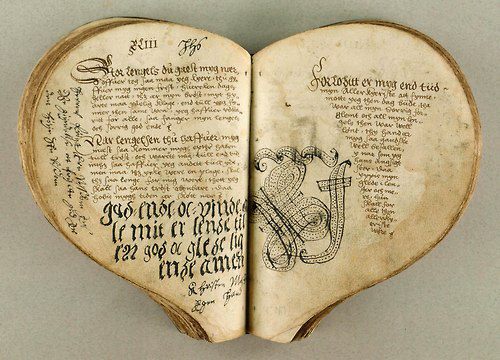
Danish “Heart Book”

Closed, it is a question
mark missing the finality
of the dot that holds
its fragile curve in place,
half of what it could be.

Opened, a great yearning
lives in the curlicue of each letter,
yellowed pages burdened by the black
ink of a centuries-old plea: for misery
to end and turn into good.

After that, two other poems I had jotted down in my journal and on my iPhone finally started to take shape on the page. Now I feel like I’m back on track.


2 Comments

14 Words, One Love


For the last week, I’ve been supporting my fellow double-life poet, Jodi Barnes, in her effort to collect 1,400 14-word love poems to distribute on Valentine’s Day. The first day, I wrote one poem, but since then I’ve written no less than three poems each day and as many as six! The 14-word challenge has been a great way to build up to a daily writing practice, strengthen the mind-paper connection, and focus on crafting concrete imagery.

I’ve written a series of poems, “to understand love / you must understand <blank>,” where I fill in the blank with an object or concept and then find seven other words that both describe the object and the idea of love. Here are some examples:

to understand lovegenes

you must understand genes

their endless patterns

uniting, splicing, reforming, reborn

to understand lovedogs

you must understand dogs

waiting by doors, tails wagging

in anticipation

to understand love

you must understand rings

encircling delicate fingerssaturn_false

and all of Saturn

to understand love

you must understand teatea

slow sips of honey

warming your hands

I haven’t counted them yet, but I have three typed pages of the “to understand love” series, and about six 14-word free form poems. Every evening I come home eager to prepare the next day’s patch of poems, and every morning I wake up excited to post what I’ve written and watch the number count creep closer to the goal. Most importantly, I am having fun while supporting a worthwhile effort to spread love throughout the Triangle.

Try your hand at a 14-word love poem by leaving a comment.


3 Comments

Black * Woman * Professional


Manuscript Section 1That’s the title of the poetry manuscript I submitted to a book contest one day before the January 31st deadline. On the one hand, assembling the manuscript was exactly like organizing the creative thesis for my MFA program—printing out every poem, creating piles of poems with a similar theme, ordering the poems in each themed pile, putting the themes in the order they should be read.  That part was easy.

The hard part was changing my mindset from a “hoop-to-jump-through-in-grad-school” to a “poetry-collection-someone-might-read-one-day.” Making that switch meant I had to treat the manuscript as if it were already a published book. These days, many poetry and prose books have sections break up the reading and the poems or chapters that follow. Some are as simple as Tracy K. Smith’s Life on Mars—One, Two, Three, Four. Others provide more information about the poems or chapters that follow. For example in Casual Vacancy, J.K. Rowling uses quotes from the Local Administration Manual to give a clue to what to expect in the next set of chapters. Having just finished that book on my Kindle Fire, I looked for something to help me tie the sections and the book together.

Then I remembered the book, Our Separate Ways: Black and White Women Struggle for Professional Identity. I read this book about 10 Our separate waysyears ago, and then again in 2011, in my critical thesis semester. Flipping through it, I realized the chapter titles could organize the themes of my collection, and then, chose quotes from the book that connected to the poems:

  • Fitting In (I feel like a guest in somebody’s house.”)
  • Work Isn’t Everything (The thing that’s on every single black women’s mind is the whole issue of relationships.”)
  • Their Father’s Daughters (My life is different from my mother’s and father’s; theirs was a different time.”)
  • The Racialized Self (I experience myself as being exotic and mysterious to most white people.”)

No matter what happens with the contest, I’m satisfied with how my first poetry collection turned out.


7 Comments

In Service to Poetry


living poetry leaf_2I’ve been a member of the Living Poetry Meetup group since December 22, 2008—7 days after the group was started—and a co-organizer for almost 3 years. During that time, I’ve organized discussions with local poets, facilitated the poetry book club and critique group, recorded several podcasts, sent out poetry prompts every Monday morning, and volunteered for poetrySpark. At times, my Living Poetry responsibilities have been hard work and have taken time away from my own writing, but those times were minimal, and even secondary, to the pleasure of meeting new poets, hearing old, new, and new-to-me poems, and discussing our craft.

But I never thought of it as a service to others—until yesterday. At Living Poetry’s 4th Anniversary Party, double-life poet, Anna Weaver (who took the bronze in our Best of Living Poetry 2012 contest) thanked the Living Poetry organizers for all that we do for poetry in the Triangle. Someone else chimed in and called Living Poetry, “A one-stop shop for poetry in the Triangle” (which should become our new tagline). I must admit, it was a little overwhelming to be thanked for promoting, developing, and supporting poetry—something that I absolutely love to do. I guess if you’re doing something you love, it doesn’t seem like a burden.

And while I’m on the subject of thanking people who act in service to poetry, I’d like to give special thanks to my co-organizers, Bartholomew Barker, Tara Lynne Groth, and Angelika Teuber, who make  it fun and cool to be a poet!