A Poet's Double Life

For poets working outside the literary world.


1 Comment

The Poetry Stacks


One of my favorite writing spaces in the Triangle also houses an excellent collection of literary magazines—UNC’s Davis Library. The 1st floor periodicals section is a labyrinth of metal shelves surrounded by over-sized chairs in soft yellow, green, and plaid hues. The room is flooded with light from the floor-to-ceiling windows on two sides of the room. Every month or so I walk down an aisle and grab literary journals from their cold homes and carry as many as my arms can hold to a sunny spot by the front window.  (FYI – Such reading is best done with a dark chocolate mocha from Caribou Coffee).

Here is where I was introduced to the work of Adrienne Su, Victoria Chang, and Jan Beatty. Here is where I fell in love with Alberto Ríos’ “A Small Story about the Sky”, which inspired me to write a poem in response, “The Truth about Fire”

You’ve heard the story about the sky––/ how fire burned it black / and kept a little piece of blue. / If only the story were that simple: a fire growing into its power / and then the poor sky consumed/ by all those flames.

“After the First Shot” by Saeed Jones appeared in West Branch Issue 69

I am always surprised to see the work of poets I know.

And I make sure I bring quarters or dollar bills for the photocopier, so I can bring some of my favorites home.


Leave a comment

Poems Every Day


Conversation with my friend, J, in her kitchen on Wednesday night:

JH: How many poems do you read a day?

PT: Only two. Writer’s Almanac and the daily poem from Poets.org. I read those on my phone.

JH: That’s it?

PT: Oh wait! I changed my email settings for the Library of Congress Poetry 180 project. I used to get the weekly digest, but I get those poems every day. Or whenever the government sends them out.

J continues potting her winter bulbs.

PT:  Well, it does depend on the day. The American Life in Poetry poem comes on Mondays. And then on Wednesday, there’s the Linebreak poem. This week’s poem was great. Let me read it to you:

PT reads “The Centurion Divulges More

PT:  Oh yeah, I’ve got the Poetry Daily app on my phone. They post a new poem everyday, but sometimes I don’t remember to check and end up reading a week’s worth of poems on the bus.

JH: Is that it?

PT: Well, there’s always whatever poetry book I’m reading now.


2 Comments

Critique Groups


When I first started writing, I shared poems with a few friends who appreciated the written word. After they read it and said it was good, I added the poem to the rest of my collection on my hard drive.  I was writing for myself, to express the feelings and memories that silenced my tongue. When I declared myself a poet, I somehow realized I had a duty to share what I wrote. But more than that, I wanted to make my poems better–though at the time I had no idea what that meant.

The Living Poetry Sharing Creativity workshop was the first time I had ever had my poems read by strangers. I found it helpful to hear my poem read in someone else’s voice, understand the places where the reader was confused or moved, and consider other possible directions to take the poem. After I finished my MFA, I found myself looking for a group to help me review and revise poems I wanted to send out for publication. At first, I joined a group that exchanged poems on a weekly basis via email, but found it difficult to keep up with the pace. Also without seeing the poet’s reaction, it was difficult to gauge whether the feedback I had provided was helpful. Fortunately some of my female poet-friends formed a face-to-face group that meets monthly and know I feel I have a safe place to test drive my poems.

Here are a few observations that I think make critique groups work:

Having structure for sharing feedback: A common structure for feedback starts with reading the poem twice, by someone other than the poet and then by the poet herself. Participants provide positive and negative feedback to the poet, trying not to repeat what someone else has said. Most of the time, the poet remains silent until all feedback is shared. Then the poet is allowed to ask questions or react to the feedback. Whereas our monthly group doesn’t follow this structure exactly, we’ve all been in enough workshops to know the usual process and that helps moves things along.

Working with poets whose work you like and whose feedback you trust: Most of the women in my monthly group have known or known of each other for years through poetry events in the Triangle. I’ve read or heard their work and always look forward to seeing what they are working on.

Commit to meeting on a regular basis: My monthly critique group is full of busy women who are balancing custody arrangements, teenager activities, business travel, and long-distance relationships along with everything else in our lives. But we manage to work around everyone’s schedule to find dates and time that work (Doodle helps!)

Sharing more than poems: A critique group is a place for us to connect as poets, share our successes and challenges, be supported by people who have responded to the same call.

Let me hear about your experiences with critique groups by leaving a comment.


1 Comment

My Poet’s Notebook


Most of my poems were born in a 4.3 X 6 inch Picadilly wire-bound journal I bought for $4.99 in the bargain section of Barnes and Noble. I used to have separate notebooks—one for thoughts, one for dreams, and sometimes a third for my to-do lists—but I’ve consolidated to one notebook for my entire life because everything is connected, isn’t it? I’ve saved over 30 notebooks, going back to 1999, though I didn’t always write in them on a regular basis. And of course, I’d love to say I write daily, but the reality is that I don’t. However, I bring my notebook everywhere, just in case a thought falls out and needs a safe place to land.

My current journal contains sayings of Buddha on every page as well as notes from my Spanish conversation class, three-minute poems, and the poems I need to write but haven’t finished. It’s also the vehicle to carry around photos, letters, and printouts of poems I’ve read at open mic events. A lot of what my notebooks contain may never become poems, they are the filler helping me to write my way to the next idea.

When I was in my MFA program, I came to the page with the expectation that what I was about to write would become a poem. With a packet of 3-5 poems due each month, I felt pressure to make every word count. Working full-time, I felt I couldn’t waste any thought, that every thought must eventually become a poem or else! Fortunately, my 3rd semester adviser, Sascha Feinstein, gave me this advice:

“Consider everything in your notebook to be seeds, and understand, too, that seeds need time to grow.”

Now I approach writing in my notebook as being just that—writing in my notebook. With what I learned about my writing process, I know there are good poems living in those pages even if I have to go back 2 or 3 notebooks to find them. What’s most enjoyable is reading about the events going on in my life around the poems, seeing the context in which each poetic thought grew, and understanding what might have influenced this word or that image.


4 Comments

iPhone Poetry


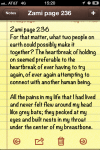
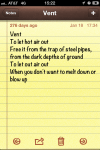
Every once in a while I forget my journal or a pen or I don’t have room in that cute purse that goes with the tango dress to fit paper and pen. But I always have my iPhone. Recently, I scrolled through the Notes app and found dozens of poem first drafts, book quotes, as well as lines and phrases that might one day find their way into a poem. I’m sharing a few here:


2 Comments

Ekphrastic Poetry


For me, art is a constant source of inspiration. I walk through museums and galleries with a petite notebook and matching pen in my back pocket to catch whatever comes to mind. When I look at a work of art—be it a painting, photography, sculpture, or mixed media—I try to imagine myself inside the piece, either as the subject or the person observing the scene. For example, here’s what I wrote in response to this photo of fireworks:

Spark

Photo by Katia Singletary Art and Photography

One hand gropes
in the dark
and finds its match.
Now fingers intertwine
like stacked wood
transferring heat
from pressed palms
to wrapped arms,
pulling closer
and closer.
Then lips touch
and the miracle
of fire burns slow
through hips and toes.
Embers of shared
breath rise until reds,
purples, and golds bloom
and burst into fiery
chrysanthemums.

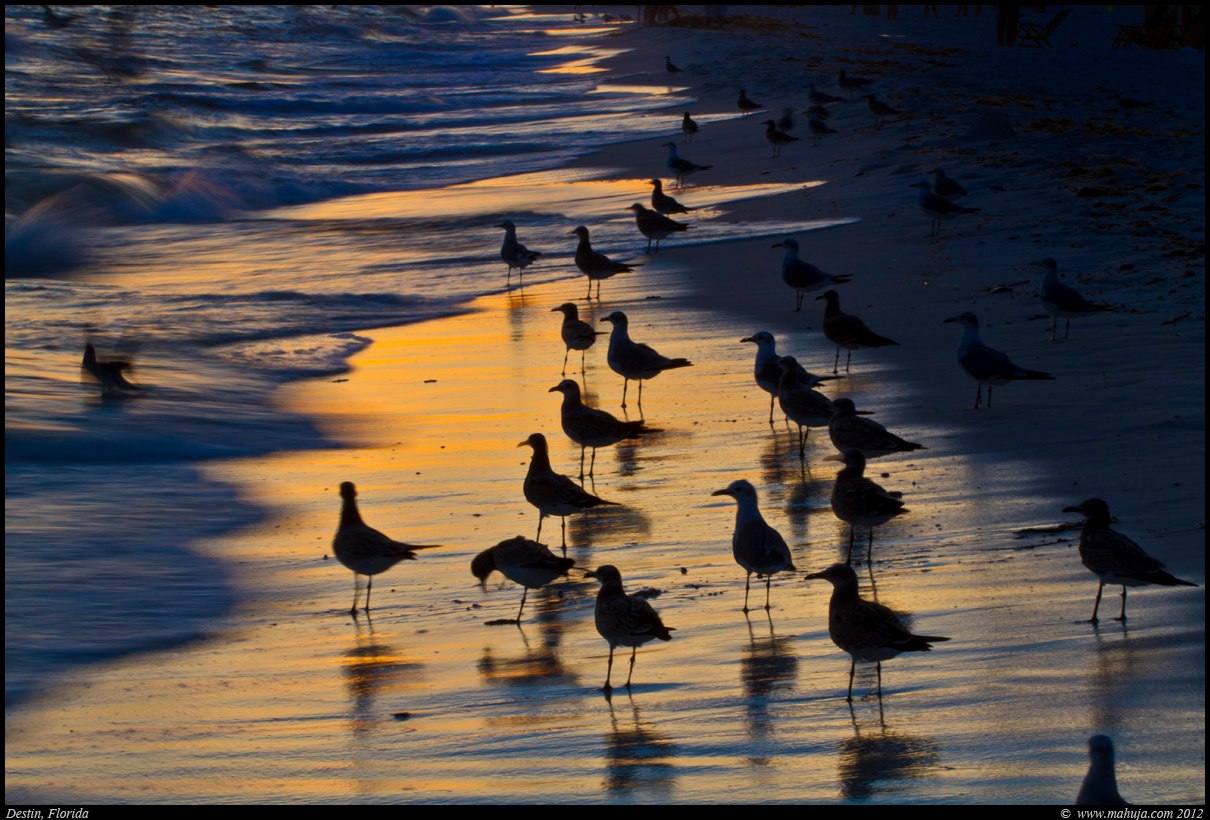
I like photography because a photo is literally a snapshot of a moment, which goes along with the narrative elements of the poems I write. Former North Carolina Poet Laureate, Cathy Smith Bowers calls this, “shining a light on a moment in time.”

Photo by Manish Ahuja

As a poet, I have complete freedom to choose which moment to feature. The unseen creatures are the focus of this haiku:

The receding tide
leaves sand crabs bare on the shore
Raucous seagulls snack

A good ekphrastic poem should be able to stand by itself—without the requiring artwork to provide the context. At the same time, the poem should complement the artwork, enhance the meaning of the scene beyond what you can experience just by looking at it. Here’s a poem inspired by the well-known painting, The Sleeping Gypsy (read the poem and then visit the painting).

The Sleeping Gypsy

And now she sleeps—
stretched—with her water jug
nearby and the moon standing
guard overhead. I’ve stalked her
wandering scent in the desert heat,
beheld her bedazzling garments
as if a rainbow wrapped its arms
around her dark beauty. The mandolin
silent, but still singing her deep
alto into my jaws, my paws. I long
to be that instrument—what she wants
near, what her arms can hold.

Special thanks to photographers, Manish Ahuja and Katia Singletary, for granting permission to use their work.


Leave a comment

One More Open Mic


Living Poetry is jumping into the Triangle area open mic scene with an Open Mic Workshop at Straw Valley Café. You might remember this is one of my favorite places to write—and now, it will be one of my favorite places to read.

The idea came out of poetrySpark’s Best of the Open Mic contest. Most of the poets had a good stage presence and delivered their poems in the allotted time, but there was one contestant who must have read the longest poem she had ever written. She went well beyond 5 minutes—more than doubled it in fact—and flipped the page not once, but twice during her stage time. This poet went so long, I had time to go to the bathroom and come back to my seat before she even finished. Needless to say, she didn’t win the contest.

If you’re a “page poet,” getting up to read in front of an audience may feel like torture. I know many good poets who rarely give public readings. In fact, the Featured Reader event was the first time three of the six poets selected by the judges had read their poems in front of an audience.  If you are not an experienced reader, here are a few things to keep in mind:

  1. Pick a poem with audience appeal: That poem about your root canal may not be as interesting to others as it is to you (unless it is hilarious). Believe it or not, an open mic is a form of entertainment. People attend because they enjoy hearing poetry. Sometimes a poem that reads well on the page doesn’t translate well to the ear. That doesn’t mean you have to read fluff or avoid tear-jerker poems. Just be aware of which poems resonate with others.
  2. Know your poem: Read your poem before you step up to the microphone. Read it again. And then when you’re done—read it one more time. This step is particularly important if you are debuting a poem to see how people respond. You don’t have to memorize it (though the audience will be thoroughly impressed if you do), but the poem should be familiar enough so you can read it without stumbling over the words.
  3. Time your reading: Most open mic events have a time limit for each poet to read. Five minutes is enough time to read 2-3 poems (up to 25 lines each) and give the audience a little backstory for each poem. Having a good sense of how long your reading will take should help you feel more relaxed when you are on stage.
  4. Perform your poem (a little): Try to match your delivery to the poem. Be animated in your voice and use hand gestures if the poem is funny or lively. Be subdued if the poem deals with a difficult situation. Always, it is important for you to speak clearly and enunciate each word. The ear is not as forgiving as the eye and needs a little more time to process. Also, pay attention to your own punctuation—use commas, periods, and stanza breaks to pause, make eye contact, and of course, breathe.

Hopefully, you will overcome your fears of reading in public and join us for this event. If you don’t make it tonight, there are other open mic events on the horizon.


3 Comments

Three Minute Poet


A few weeks ago, I ran into Jan Parker sitting at a crowded bar right before the Erotic Poetry and Burlesque show started. After exchanging the usual long time no sees and you’re looking mighty fine tonights, Jan cut to the chase and asked the question I dread the most, “Are you writing?” Most people ask how is my writing, and I can satisfy their curiosity with a simple, “Fine.” If pressed for more specifics, I can always rattle off my litany of poem ideas to fend them off. But this was another writer asking me the question, and more importantly, Jan Parker, who has a finely tuned BS meter. So I told her the awful truth, “No, not really,” then gave her the run-down of my September–poetrySpark (of course) and the weeks of planning before the event, the upcoming football trip to Charlotte, and the wraparound weekend in Myrtle Beach with mom and then to Atlanta for a professional conference. And I did not fail to mention my day job and the 8 projects pulling me in exactly that many directions.

Jan held up a finger then dismissed my excuses with the shake of her salt and pepper mid-length bob, “You only need three minutes a day.”

“Three minutes?” I repeated incredulously. Three minutes is about how long it takes to write a poem on demand. Even I could do that. And maybe that would make me feel less guilty about not finding the 15 minutes in my day to write (as a former MFA advisor once suggested) or being able to get up earlier than the crack of dawn like Mary Oliver.

In the interest of full disclosure, I have not written for three minutes every day, but there has been at least one time each week when I’ve found time to put pen to page. Here are a few good lines:

September 18th: We used to believe that pluck and determination could shatter glass faster than our silent screams of protest

September 24th: The hall is dark, save a strip of light on the floor. When my eyes focus, my ears hear the music of laughter and clinking glass

September 29th: The ocean talks in his sleep at night in rhythmic murmurs

I’ve even used the three minute time to write poems in response to the Monday Poetry Prompt I send out each week to the Living Poetry Meetup Group

Visual prompt (9/24): From here the earth looks like the globe on your father’s mantle–perfectly round and unmovable

Borrowed lines (10/1): And the kiss that drained all of the bitter cynic from my blood


These poems and lines are not “finished”, but the three-minutes-a-day mantra keeps the creative juices flowing and helps to maintain the proper balance in the double life.


5 Comments

The Poems I Need to Write


Lately, I haven’t been writing much because the double life is working overtime. My daytime career is chock full of project meetings and deadlines. My evening career is tying up loose ends with preparations for poetrySpark next weekend. Most nights, I collapse on the couch and veg out in front of the TV, often falling asleep before I realize it. And I feel guilty about it. Don’t real poets write at every possible moment? If Mary Oliver could get up at 5 and write for a couple of hours, isn’t that what I should be doing?

Instead of being so hard on myself, I am trying a different tactic—writing poem ideas down. Often the topics come in the form of working titles and a line or two that might be in the poem. Here’s my list so far:

Suiting Up: “If I don’t belong, at least I can dress the part”
Natural Hair: “Yes, natural hair is making a comeback everywhere—except my mother’s house”
Cleaning up the Break Room: “She wipes away the crumbs so they won’t think we’ve left a mess behind”

Then there are the planetary poems about I need to write to go along with the “Transit of Venus” poem I wrote during Cave Canem:

Mercury in Retrograde
Curiosity of Mars
House of Saturn

And the science-based poems that with any luck will turn into extended metaphors about race:

Dark energy/dark matter inspired by Adler Planetarium in Chicago.
Dark spot corrector inspired by a casual conversation with one of the inventors

I might have a trio of “Stuff White People Like” poems if I can ever finish that poem about yoga (#15) and start that poem on grammar (#99)

And just yesterday, I got the idea to write persona poems about famous women in technology

Lady Ada Lovelace – 1st programmer and daughter of Lord Byron
Grace Murray Hopper – found the first “bug”
Patricia Selinger – creator of stored procedures

Whenever I do get time to write, this list will keep me plenty busy!


Leave a comment

Finding a Home for Your Poems


A good friend once told me, “Dating is all about getting the at-bats.” The same can be said about publishing poems. Part of my struggle is the time it takes to sift through my VCFA manuscript and the poems I’ve written since graduating in January to figure out which poems I still feel good about sending, which ones still needs revision, and which ones make me shake my head (What was I thinking when I wrote that?!).

Last month, I posted about my first time sending out publications, and now, I am gearing up for a second round. My pool of poems is limited by the submissions that are pending and whether the lit mag accepts simultaneous submission. So far, I’ve heard news only about 2 out of the 5 submission – a “nice rejection” (try again) and an acceptance 1 out of the 3 poems I sent (yay!)

This time, I’m using these sites to identify literary magazines:

  • Duotrope – has a submissions manager to help track the results of your submissions, lists new, defunct, and resurrected literary magazines, and allows writers to search for a good match
  • New Pages – maintains the “Big List of Literary Magazines” with reviews of each publication as well as links to their websites

Browsing through each site is a bit overwhelming, but I find comfort in knowing there are so many possibilities out there. It gives me hope that each poem will find the right home. Now if only dating worked the same way. 😉