A Poet's Double Life

For poets working outside the literary world.

Superheroes at Work

Leave a comment


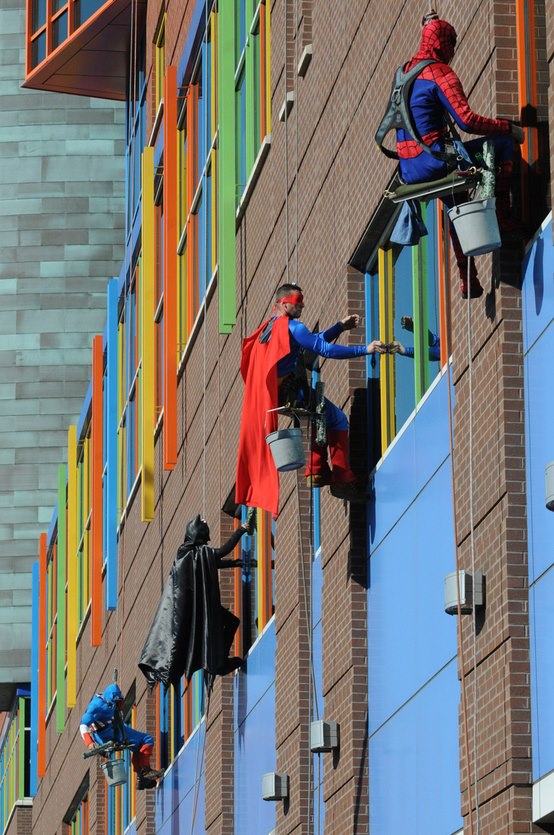
I often say being a poet with a double life is a lot like being a superhero. Here’s a cool photo from the Pittsburgh Tribune-Review of some superheroes at their day jobs (maybe a few of them are poets, too!).

Window-washers from left, Mark Errico (Captain America), Jim Zaremba (Batman), Ed Hetrick (Super-Man) and Rick Boloinger (Spiderman) rappel down the side of Children’s Hospital on Monday morning, Oct. 22, 2012 as the crew of washers from Allegheny Window Cleaning Inc. rid the windows of the Lawrenceville hospital of grime. © James Knox

Special thanks to double-life poet and blogger, Jodi Barnes for sending this photo!


7 Comments

How Poetry Events Happen


Tonight, I will read my poem “Transit of Venus” at the North Carolina Museum of Natural Sciences as part of the weekly Science Café Talks. The actual planning for this event started in November, but the forces that brought everything together started way before that.

responsibilitytoaweLet’s go back in time to July 2011, the beginning of my last semester in my MFA program, when I was developing a lecture on poets with non-literary careers. I knew about Wallace Stevens and William Carolos Williams and was told about Wendell Berry. My list of poets was heavy on the testosterone side, so I decided to Google search for female poets I could include. I came across Rebecca Elson—an astronomer and a poet—found her collection, A Responsibility to Awe, at UNC Davis Library, and was reading it on the DRX (Durham-to-Raleigh Express) bus one morning. Back then, I preferred to sit in the back of the bus on the driver’s side. Next to me sat another regular DRX rider, a science professor at NC State, who leaned over and asked me about the book I was reading. Once I told him that the author was a astronomer, the conversation took off from there (he was a physicist).

Fast forward to June 2012—the transit of Venus viewing event at the Natural Resource Center, the newest addition to thetransitofvenus Museum of Natural Sciences in downtown Raleigh. I watched this historic phenomenon of the planet Venus crossing between the Earth and the Sun with tons of other people donning protective glasses on the rooftop of the adjacent parking lot, knowing none of us would be alive see the next occurrence in 2117. Two weeks later—the last day of Cave Canem retreat—I wrote a poem about it.

Fast forward again to November 2012—the morning wait for the DRX bus. I see my physics professor friend, who tells me that the Museum of Natural Sciences staff sent out a call for topics for their weekly Science Café talks and that he suggested a reading on poetry and science—Would I be interested? Well, of course! I’m only the co-organizer of one of the greatest poetry groups in the Triangle (I didn’t say that exactly, but it was close).  And the Living Poetry members did not disappoint. I sent out the call for science-related poems on the 13th, and two weeks later, I had over 50 poems in my inbox. I selected 10 for the museum staff to review and they chose five for the reading.

Bringing it home to today—January 24, 2013 at 7PM, Poetry Scope, an evening of science through the lens of poetry.

Leave a comment

Inaugural Poem: “One Today” by Richard Blanco


"Of, By, For" ~ Photo by Jean Christian

“Of, By, For” ~ Photo by Jean Christian Rostagni

Richard Blanco’s inaugural poem, “One Today,” chronicled a day in the life of average Americans, which for many of us center around our jobs. The poem heralds those who “clean tables, read ledgers, or save lives,” as well as people like Blanco’s Cuban immigrant father who hands were worn from “cutting sugarcane so my brother and I could have books and shoes.” The poem intermingled Blanco’s personal experience with the typical American experience, subtly making the point that the demographics of our nation have become more diverse. The last stanza of “One Today” carried the theme of Obama’s inaugural address that “Now, more than ever, we must do these things together, as one nation, and one people.”

We head home: through the gloss of rain or weight
of snow, or the plum blush of dusk, but always—home,
always under one sky, our sky. And always one moon
like a silent drum tapping on every rooftop
and every window, of one country—all of us—
facing the stars
hope—a new constellation
waiting for us to map it,
waiting for us to name it—together.

Bravo, Poet Blanco!

The full text of the poem can be found here.


3 Comments

Why I Prefer the Double Life


Another double-life poet sent me an article about the day jobs of writers, using T.S Eliot as an example. Eliot worked as a bank clerk for Lloyds Bank in London, and as the blogger puts it, “he was really good at his day job.” The blogger goes on to admit that as a writer with a day job himself, he’d rather imagine that every writer is making a killing off of writing instead of needing to have a day job.

This, of course, got me to thinking: “Would I rather make a living from poetry or live the double life?” I can’t answer this question without considering the fact that the primary way I could make a living from poetry was if I taught at a university. I could have gotten an academic job after I got my PhD in 1998, but decided that life was not for me. After I got my MFA, I get the same question. I have the same answer: “Hell no!”

So then, what makes me want to continue to have a non-literary career, one that by its very nature of using my analytical mind, takes my mental energy away from something I love to do? Because I still get something good from my day job, things I can’t get with poetry alone:

1) Affords my current lifestyle: Yes, the money, health insurance, and retirement benefits are very important to me. I’m very thankful to have a job where I can afford the poetic life—writing retreats, workshops and conferences, submission fees for poetry contests, and all those books!

certificate_achievement_award2) Satisfies my need for praise: There’s no pat on the back or “atta girl” every time I finish a poem. And getting rejection letters after 9 out of 10 publication submissions is the norm. As a poet, the most praise I could hope for is imagining that someone will read my poem and smile or pause with hand over heart or whatever one does when one reads a good poem. In the meantime, my non-literary career comes with professional recognition awards, annual performance evaluations, staff meetings where we applaud each other for doing a good job on presenting a report, and more often, verbal and written expressions of gratitude for completing a task while the project is still going on!

3) Allows me to interact with colleagues: Writing poetry (or anything else for that matter) is such a solitary venture. Sure you can gather a group of friendly poets once a month for a critique group or book club discussion, but the work of poetry happens when you’re alone with the page. The words show up, but sometimes, they are not very good. And that muse who is supposed to contribute the inspiration can be a very flaky co-worker—showing up late or not at all, making you do all the work and stepping in at the last minute to take all the credit. My real colleagues are not like that at all. We work on teams and pitch in to get a project done. I like working in an office where we can bounce ideas off each other, find a sympathetic ear to vent our frustrations, and crack ourselves up around the break room table.

Not to mention the endless poem ideas that emerge from the whole experience!


3 Comments

Inaugural Poet: Richard Blanco


Richard Blanco, 2013 Inaugural PoetEarlier this week, Richard Blanco was announced as the 2013 Inaugural Poet. Blanco is only the 5th poet handpicked to compose an original poem for the presidential inauguration (he is preceded by Robert Frost, Maya Angelou, Miller Williams, and Elizabeth Alexander). His selection is unprecedented on many levels—Richard Blanco is the youngest (he turns 45 on February 15th), the first Latino, and the first openly gay Inaugural Poet.

For me, the selection of Richard Blanco is even more exciting because he is a double-life poet, holding bachelors of science degree in Civil Engineering and a Master in Fine Arts in Creative Writing from Florida International University. He has also taught at various universities while maintaining his career as a consultant engineer in Miami. In the New York Times article about the announcement, Blanco is described as having a “facility with numbers and structural design that shines through in his writing.”

Here’s an excerpt from the poem, Burning in the Rain,” which appeared in The New Republic:

Instead of burning, my pages turned


into water lilies floating over puddles,


then tiny white cliffs as the sun set,


finally drying all night under the moon


into papier-mâché souvenirs. Today


the rain would not let their lives burn. 

Congratulations, Richard Blanco!


1 Comment

Writing on the Road


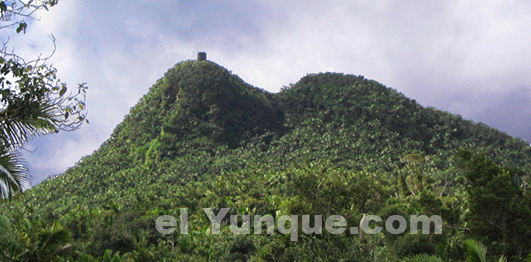
I’m in week 2 of a 3-week vacation. The first week I had access to Wi-fi and blocks of time to pen this blog. Since then, I’ve been without immediate and instant Internet access. There’s a shared mobile Internet card and not enough time in the day to collect my thoughts. This morning, I’m headed to a elyunqueeco-hotel in the middle of a rain forest. From past experience I know that the wireless is spotty at best when it is available, but often shrouded by clouds that perch themselves on the top of the mountain, blocking out the satellite connection.

Whereas blogging has been challenging on vacation, writing has not. Puerto Rican journalist, Hector Feliciano advises us to treat writing as a form of exercise. If you do it every day, it is easy; the longer you go without writing, the harder your muscles have to work to get back into shape.

I have been building to a daily writing practice–jotting down ideas in the Notes on my iPhone, carving out three-minute poems, and using larger blocks of time to scribble in my notebook. Of course, writing on the road must be fed by reading. I’ve brought along the Kindle with several fiction and non-fiction books and 3-4 poems arrive every morning in my inbox. And the ideas keep flowing!


4 Comments

Poet Resolutions 2013


2013-goalsIn my year-in-review post, I promised to share my resolutions for the New Year. Each one of these goals pushes me a bit outside of my comfort zone:

Teach a poetry workshop: Yes, I think I’m ready. I’ve toyed with the idea several times, but haven’t made the time to do it. Some of the ideas that come to mind are found poetry, erasure poetry, or maybe even a workshop on finding the journal that’s right for your work. Actually that last topic is not a bad idea.

Write a sonnet: To me, the sonnet is the pinnacle of poetic form. I love reading them, but have been very intimated by the thought of writing one because I’ve read so many good ones. But I do have one on my mental list of poems I need to write, inspired by Adrienne Su’s “Asian Driver”. It will probably take me the whole year to find the courage to write it.

Six poems published: Same number as last year. The over-achiever in me wanted to set the bar at 10 publications, but I’m going to try to get her to take it easy this year. Either way means I have to continue to Write! Write! Write! Submit! Submit! Submit! and that’s the part that pushes me.

Share my poetry: Last year I realized that publications aren’t the only way to share my work. I posted my April poems on Facebook, but took them down at the end of the month. The November poems are still up there, so that’s a step in the right direction. But to push myself outside of my comfort zone, I will start posting more poems to this blog, like “Winter Solstice.” Maybe I can make the Three-Minute Poem a regular feature.

Talk to more double life poets: I know they are out there. I read their work, but I don’t reach out to them. I want to feature their work and their creative process on this blog. I want to learn from them.

Blend double lives more: I started doing this when I updated my LinkedIn profile. I don’t know what this will looks like or how to do this, but I have a feeling it will be an interesting journey.

Let me know some of your writing resolutions for the New Year by leaving a comment!


2 Comments

To Be or Not to Be. . .Separate


The fundamental question for a double-life poet is, “Should I keep poetry separate from my working life?” Wallace Stevens turned down an appointment as the Charles Eliot Norton Professor of Poetry at Harvard because he didn’t want to be forced to retire from his job as an executive at The Hartford. William Carlos Williams felt being a doctor and being a poet were “two parts of a whole” and often scribbled poems on the back of prescription pads.

I faced this question while updating my LinkedIn profile. It’s funny how the most innocuous tasks make you rethink your whole raison d’être. Anyway, it’s been almost a year since I graduated from VCFA, but that information wasn’t on the résumé. Neither were my writing and presentation skills mentioned anywhere and none of my recent poetry publications were listed. Isn’t my MFA important to me? I’ve only mentioned it in 10 of the 40+ posts I’ve written for this blog. And don’t I want to use my writing and presentation skills more? Start to blend my double lives more?

And then that ultimate negating phrase popped into my head, “Yes, but”

Yes, but what type of message is that sending?

Yes, but this is a professional website and poetry doesn’t fit.

Yes, but the poetry stuff and work stuff should be separate.

Adding this information was simple – selecting the school, degree, and year from the drop-down menu, typing the words,LinkedIn Profile “writing” and “publication” in the summary section, and copying and pasting the link to my latest publication. I mean, that’s what makes me unique, right? That I like to tell stories with data, that I like to write, that being a poet in a professional world, I wrestle with and simplify complexity, have a more acute sense of empathy, am creative, and can infuse life with beauty and meaning. And just like that, my poetry and non-literary career became one.

I look forward to the day when poetry and my non-literary career can peacefully coexist in my every day world and not just on my LinkedIn résumé.


Leave a comment

Poets Speak Out on the Connecticut Tragedy


Rock Me MercyIn the wake of the tragedy in Connecticut, I’ve found no words to express the sadness I feel for the young lives violently taken out of this world, the caring adults who tried in vain to protect them, and the families who now experience unspeakable grief and pain as a result of this horrible event.

Fortunately, other poets have. I’m sharing a few of the poems here:

Rock Me Mercy by Yusef Komunyakaa

Hi Mommy (my first haikuby wolfman  

 An Essential Journey Back to Light by Nicolas Cable

 Crumble Life Poem #48 by Christopher Poindexter