A Poet's Double Life

For poets working outside the literary world.


7 Comments

Double the Life, Double the Accomplishments


UNC_PhotoAfter writing poems for 30 days, I had to shift gears to focus on the work side of this double life. In fact the work project I was leading was a constant in the backdrop of September’s poetrySpark, the November poem-a-day challenge, and poetry submission deadlines. As hard as I worked on my poems on Sunday afternoons in the office at the library, I worked equally hard–if not harder–in writing a report for work. And finally, it has culminated in a presentation before a state legislative committee on operational efficiency within the University of North Carolina system (check out the video clip from News 14 and the write-up on WRAL).

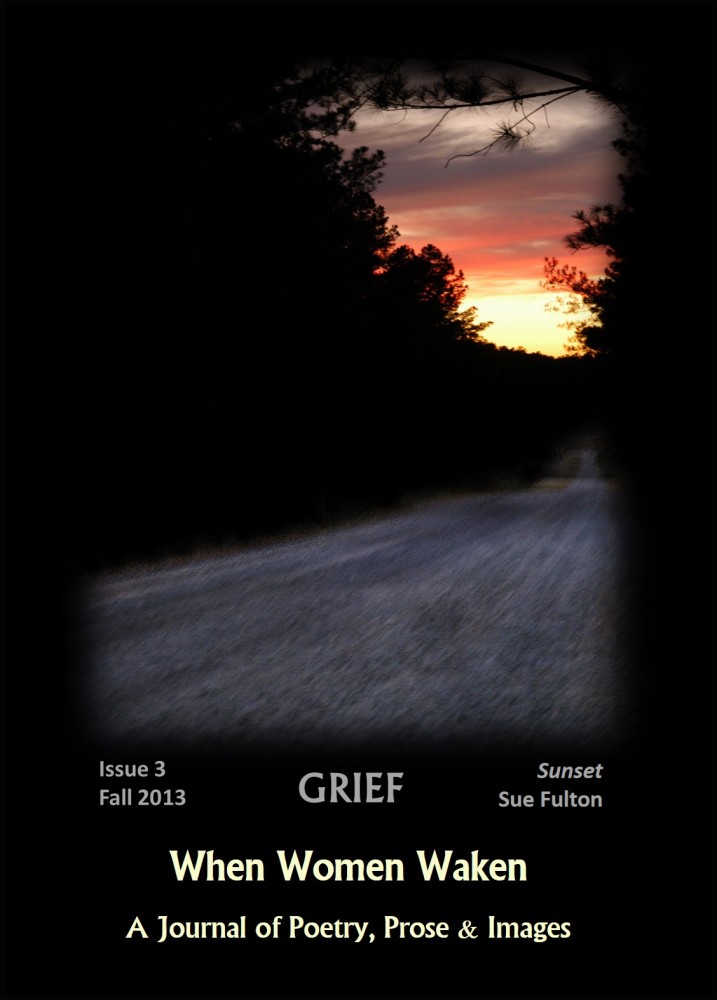
griefissueIn true double-life fashion, this work accomplishment is accompanied by a few poetic accomplishments: submitting a chapbook to two contests and getting two poems published in the Grief Issue of When Women Waken, including the Day 5 poem of the November 2013 PAD challenge.

Times like this is why I love the double life!


3 Comments

Back to Business


opensignThe end of the government shutdown coincided with the end of writing a report for work. Now I have more time to turn my attention back to the business of poetry. Like any job—double life or otherwise—some tasks  you love and other tasks you tolerate as necessary evils. For me, submitting work to literary magazines and contests is  on the necessary evil side of things. It’s a lot of work for little (if any) reward and the process is never-ending:

  • Search for places to publish
  • Read published work to get a sense of how my work fits
  • Read and re-read submission guidelines
  • Print out potential poems to submit
  • Read, revise, and tweak selected poems
  • Order selected poems
  • Re-re-read submission guidelines
  • Prepare submission packet (cover letter/bio and poems)
  • Submit packet (and payment, if required)
  • Hope and pray

Last year, I focused on getting individual poems published and was successful. I’m still working that angle and adding chapbook contests to the mix. I have quite a few poems, but not all of them are ready for prime time. So selecting 10-30 of my better poems for a chapbook seems less daunting. Here are the chapbook contests on the horizon:

  1. Sunken Garden Chapbook Poetry Prize (10/31): co-sponsored by Tupelo press; 20-36 pages judged by Mark Doty 
  2. Coal Hill Review (11/1): co-sponsored by Autumn House Press; 10-15 pages judged by Michael Simms
  3. Minerva Rising Chapbook Contest (12/1): themed contest, “Daring to be the Woman that I Am;” 12-15 pages judged by Rosemary Daniell 
  4. Imaginary Friend Chapbook Contest (12/15): open to anyone who doesn’t identify as a straight, white male; 12-20 pages judged by Shane McCrae, Ching-In Chen, Margaret Bashaar, Noel Pabillo Mariano, and Ayshia Stephenson


4 Comments

Over-Scheduled


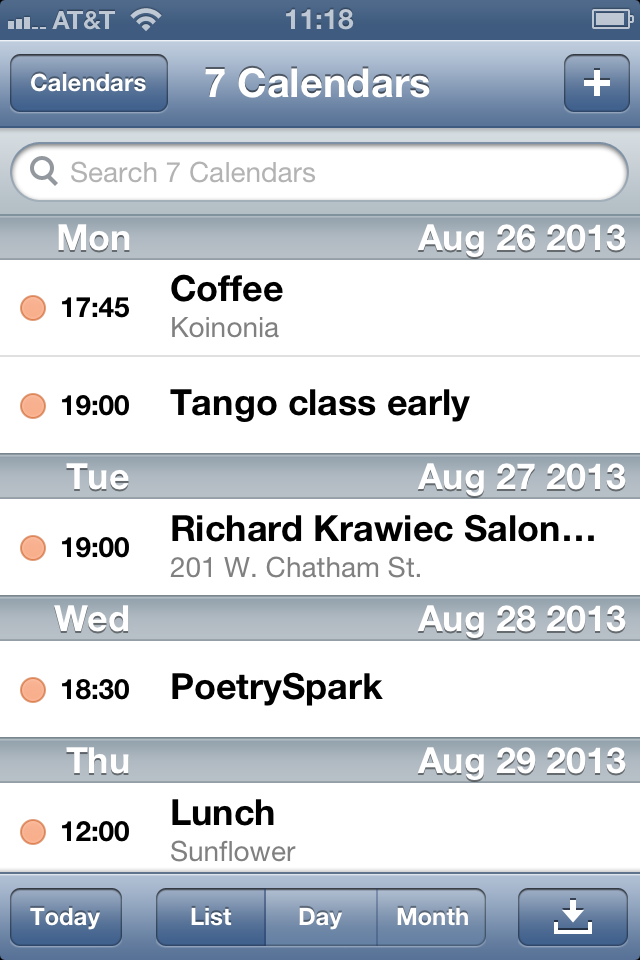
photo-2I hate to look at my schedule for the next few weeks but I can’t help it. I carry around a calendar in my head.
This week is packed–coffee meet followed by tango on Monday, practice session for a art salon on Tuesday, last poetrySpark organizer meeting on Wednesday, lunch meet on Thursday, and flying to California for the Labor Day weekend on Friday. Full days at work are the unmentioned yet unavoidable backdrop to the landscape of the upcoming week. September is no better–VCFA alumni gathering, a practice session for the art salon, a wedding, poetry book club, softball double-header (watching), poetrySpark, and a milonga–all before the 15th! And did mention the work project I am leading will be in the report writing phase and having to fly out to a professional conference in Austin, TX the morning after the art salon? And I know what you’re going to say, Pam, when are you going to have time to write, revise, and submit poems? I have no clue. September I will take a break from tango classes, though I don’t know if work or poetry expand to fill that void. We’ll have to wait and see.


Leave a comment

The Power of a One-Day Writing Retreat


You get in your car with the mini-tote bag from the Strand stuffed with your wallet, cosmetic everything bag, your poet’s notebook, and lunchcedargrove—sesame salad, a Granny Smith apple, boiled eggs, and those addictive dark chocolate covered açai berry & pomegranate seed snack packs. You drive 25.7 miles from the heart of your urban life, passing a pasture of feeding cows, fields with odd-shaped and dilapidated houses, and a community store selling produce most likely picked down the road. Aside from the construction on Highway 86 that causes a patient backup of cars needing to continue down the only open lane, there isn’t much excitement in Cedar Grove—a perfect place for a one-day writing retreat.

Eleven writers wind their way down a gravel road on an old tobacco farm to get to the wooden cottage at the far edge of the property. For some, this time—9:30 AM to 4:00 PM on a Saturday—is the only time they have to dedicate to writing. You get three prompts to help you go where the writing takes you. And the writing takes you to the magical and the ordinary: grandfathers in spirit and vulture form, stuffed armadillos, the history that a hammock sees, a collection of boxes under a bed (not to be confused with clutter), your high school journal, your father’s journal, fancy dresses next to men in tuxes, inside the mind of teenager, and Botox.

You leave with a sense of accomplishment and community, and a strong desire to keep the writing going.


1 Comment

Poet Heal Thyself


Wounded-heart-with-bandage

A research study of older adults in New Zealand demonstrated the power of writing in the healing process. The study assigned two groups to write about their lives. The first group was asked to write about a traumatic event, how they felt about it at the time, and to share thoughts and emotions they had never expressed. The second group wrote about their plans for the next day with no mentions of their feelings. The researchers took small biopsies of their skin and photographed the wounds to see how they were healing. After 11 days, the 76% of the people that hard written about their feelings had fully healed compared to only 42% in the other group.

This study completely fascinated me because it provided credible evidence of writing as a way to heal physical wounds. I know from personal experience that writing can heal emotional wounds. I started writing in late 2004, about a year after my father’s death in a car accident and the end of a 10-year relationship. Reading a book of poetry by Edna St Vincent Millay triggered the outpouring of emotions that I had kept to myself. Many studies have shown the benefits of writing for physical and emotional well-being. In fact, a recent article reported that Pierce Brosnan–Remington Steele and James Bond–is writing poetry to cope with the grief of his daughter’s death. However, writing about pain and grief doesn’t make you a poet; only when you aim to share that experience with others can your writing benefit the greater good. As James Baldwin once said, “your suffering means something only to the extent that people can attach their suffering to yours.”

In his craft talk at Cave Canem, Chris Abani posited, “all writing comes from an existential wound.” In his mind, wounds are not to be confused with suffering—to have a wound is not the same as being wounded. Abani believes that recognizing a wound is the key to opening up everything. The narrative of the wound becomes the story we’re telling—it is the driving force behind why we write. As poets, writing from a wounded place can bring more than self-healing. When our writing speaks from that existential wound, we can connect to others in a deeper way and be the catalyst for healing ourselves as well as our readers.


6 Comments

How Poetry Can Change Your Personality


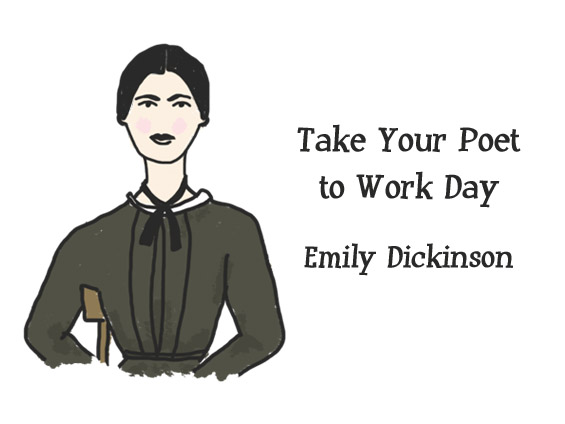
Take-Your-Poet-to-Work-Emily-Dickinson-coverOne of my favorite bloggers, Patrick Ross at The Artist’s Road, reviewed the new book Creative You: Using Personality to Thrive by David Goldstein and Otto Kroeger. The book breaks down creativity across the sixteen personality profiles found in the Myers Briggs Type Indicator (MBTI). The MBTI personality profiles are a combination of four dimensions:

1) Direction of Energy: E(xtroversion) or I(ntroversion) – E’s prefer to attend primarily to the outer world of people and things, whereas I’s prefer the inner world of ideas and thoughts

2) Tools of Perception: S(ensing) or iN(tuition) – S’s are interested in applied and pragmatic endeavors whereas N’s prefer more abstract and theoretical endeavors.

3) Tools of Judgment: T(hinking) or F(eeling) – T’s are more interested in a technical-analytical approach to life and F’s are more interested in the communications-relationship aspects of life.

4) Lifestyles: J(udging) or P(erceiving) – J’s prefer a lifestyle that is more structured and decided and that allows them to bring closure to things, whereas P’s prefer a lifestyle that is more flexible and adaptable and that allows them to continue to gather new information

From the time I took my first battery of personality and career-interest assessments in college, my MBTI has been INTJ. These letters roll off my tongue as easily as my childhood home address. They are engrained in my brain like the product of 8×7 (56!) has been since 2nd grade. My boss is a certified MBTI consultant and gave us the assessment in February 2011, where I was once again, INTJ. Fast forward to June 2013–four new people at work and another opportunity to take the MBTI, where I was an INFJ. A what? When did I become a F?

I certainly blame poetry for the transition (seamless as it was). One of the major differences between T’s and Fs is this: T’s believe telling the whole truth is more important than being tactful and F’s believe being tactful is more important than telling the “cold” truth. As a poet, I certainly believe in the words of Emily Dickinson, “Tell all the truth but tell it slant.” Poets are more concerned with the big T universal truth and sometimes have to change the facts to reach that goal. I guess creative non-fiction writers like Patrick are INTJ’s because their work has to find that balance between the big T and the little T of truth.

Here are a few more insights about INFJ’s

  • often have deep interests in creative expression as well as issues of spirituality and human development
  • they live for insight and imagination, and they move freely in the inner world of ideas
  • have a love of learning and they are typically academically inclined
  • their great powers of concentration can make them excellent researchers
  • often have facility with the written or spoken word, and with foreign languages, and reading is usually a source of great joy for them

Ok, so maybe the INFJ shoe fits. What’s your MBTI type?

The real MBTI cost $150 to take, but Personality Pathways offers a cognitive style inventory that approximates your MBTI preferences.


6 Comments

Happy Double Life Anniversary!


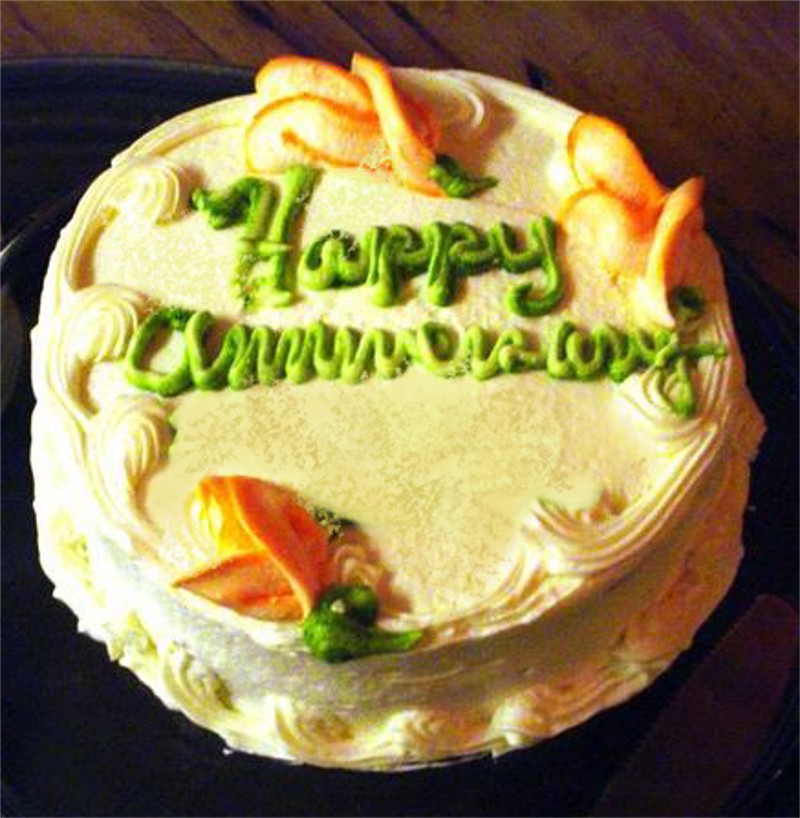
anniversary

It’s been a year since Poet’s Double Life joined the blogosphere. A few quick stats (because that IS what I do): 95 posts over 3,000 views from over 20 countries! I’ve posted mostly about how I maintain the creative side while having a full-time career in the non-literary world. For me, it boils down to the three R’s:

1) Reading: Keeping the brain fed with other good writing is the primary way  I maintain my creative side. I’ve had several posts on the books that have found their way off the library shelves and into my hands.  I’m currently reading two books that came highly recommended: a young adult sci-fi novel, Ender’s Game, and a poetry collection by Carolyn Rodgers, How I Got Ovah. Reading helps me maintain inspiration, even when I have trouble writing.

2) (W)riting/Revision:  These two R’s go hand-in-hand. Having several writing spaces in the Triangle helps me find the necessary solitude to get my ideas on paper. Though I often carry my poet’s notebook, having an iPhone handy is another way I jot down ideas that come to me. Writing challenges and prompt, such as the November and April poem-a-day challenges push me to produce on a daily basis and have resulted in plenty of clay to shape into better poems. Critique groups also help improve my work by letting me understand how trusted readers hear my work.

3) Reach: I am true to myself as a poet when I am getting my poems out in the world. I attend at least one open mic in the Triangle each month to read poems and connect to other writers. This past year,I’ve taken the plunge into publication by submitting my work to various contests and literary journals and have been happy with the results (see Transit of Venus, Poetry in Plain Sight,  to name a few).

Thanks for taking time to follow my double life adventures. I appreciate your comments and support.


16 Comments

Cave Canem 2013


Cave Canem Logo

First of all it’s pronounced the Latin way, Ca-VEY CA-nem, which means “Beware of the dog.” The picture of the black dog with a broken chain is a warning that Black poets unleashed will attack the world.

In seven days you write six poems and workshop them with your group of CC fellows. Faculty members rotate in the space daily, so you are exposed to a different way of reading and discussing poems. There is a day-long trip to the City of Asylum in Pittsburgh, faculty readings, fellows reading, and a graduation party.

That’s what Cave Canem does; this is what Cave Canem is–a haven for black poetry. And yes, that’s sort of what the tagline says, but there is no other way to describe it. Every day CC fellows are challenged to “write the hard poem,” that poem you’re afraid to write, that you’ve been avoiding for a while.

This time, I wrote toward the hard poem–starting with an indecisive expression of a sensation of silence within me. I came to CC unsure if I was going to be able to access what I felt inside of me, afraid of the emotional excavation that had to be done to get there. The first poem was me trying to figure what I wanted to do.

So on Day 2, I went far out, to outer space and wrote a poem in the voice of the planet Mars. I see it as a companion piece to “Transit of Venus,” and perhaps, part of a series on the planets and other objects in the universe.

Day 3 I tried to ground myself in a work poem.  Not sure how successful I was, but at least it was a start.

By Day 4, my group’s poetic aesthetic starts to influence me and I begin to lean into the lyric. I used a title in the style of one of my group mates to tackle family issues. So my writing was literally moving closer to home.

Day 5’s poem addressed a matter of the heart, and for Day 6, I think I finally wrote the poem I was meant to write at Cave Canem about feeling the weight of mortality bare down on me because I am single & childless.

And I know I wouldn’t have written that poem if I hadn’t been a Cave Canem, if I hadn’t had the time and space, the love and support of the fabulously mellow women of Group B or the other fellows and faculty as tangible examples of how to risk, fall, and fly!

7 Comments

Transit of Venus


Back in January I read my poem, “Transit of Venus,” as part of Poetry Scope, an event hosted by the NC Museum of Natural Sciences that featured  science-related poems. I submitted this poem to the Carolina Woman Magazine‘s Mighty Pens writing contest and won second place! The poem is featured in the magazine’s June issue:

photo-3

And here’s the second place prize, courtesy of Margo Froehlich of Brooke & Birdie Interior Design:

photo-4


1 Comment

When a Poet Doesn’t Write


Potential-and-kinetic-energy

I haven’t written a poem or even thought about writing a poem since May 3rd. I knew I needed to take a break after the poem-a-day challenge in April, but I didn’t plan on stopping this long. The curious thing is that I don’t feel guilty about it. I’m not beating myself over the head with the notion that I should be writing. There’s no pang in my stomach when I bring a purse too small to hold my poet’s notebook. My scientist-friends tell me that this period of non-writing is simply a time for storing up potential energy that will soon be converted into kinetic energy.

A similar pause in my poetry happened in February after writing over 40 poems for the “One Love” event. Like then, I have been biding my time by reading while waiting for the muse to make time for me in her busy schedule. This month, I’ve read:

1) The Great Gatsby by F. Scott Fitzgerald – Gatsby tells the story of the balance between wealth and excess and hope and self-deception and how we can go overboard on either side. I wanted to re-read the book before the movie came out, and at 180 pages, it only took 4 days.

2) The New Black by Evie Shockley – I saw Evie Shockley at AWP moderating a panel “Post Black? Culture, Craft, and Race in Verse,” which examined race in poetry. I had heard of Evie Shockley, but never read her work until now.

3) The Selected Essays of Denise Levertov – I picked up this book from UNC Davis by mistake. I thought it was her selected poems collection. But it had been a long time since I immersed myself in poetic craft book and the book has one of my favorite essays, “On the Function of the Line,” so I decided to hold onto it for a little bit longer. Plus I’ll use it to prepare for the upcoming podcast on Black Mountain Poets.

4) The Really Short Poems of A.R. Ammons – This book by a North Carolina poet is the June selection for the Living Poetry book club. I could probably finish it in a one-hour sitting, but lately, I’ve been filling those hours with naps instead. There’s always the bus!