A Poet's Double Life

For poets working outside the literary world.


2 Comments

After “One Love”


Last week on Valentine’s Day, over 2,200 14-word poems were handed out throughout the Triangle as part of the 14 Words, One Love event. I wrote over 40 poems in less than two weeks—and was ecstatic to learn we had surpassed our original goal by 800 poems!

And then I hit the wall. Runners often talk about the runner’s high—that rush of adrenalin that keeps them going during a marathon. The 14-word event definitely fed all the good poetic energy and reading and commenting on other people’s poems increased that positive vibe. That energy stayed with me throughout Valentine’s Day when I handed out poems to my office colleagues, distributed poems at an off-site meeting, and made special home deliveries to a few of my friends. But afterwards, I felt rung out like a worn rag. I couldn’t think about picking up a pen, let alone convincing my mind to conjure up an image to bring to life on the page.

That’s probably why it has taken two weeks to get back in the blog saddle. I had to re-group, feed the space that opened up after the “one love” was gone. So I turned to poetry books: first, to Rabindranath Tagore’s Final Poems, and then, to Sharon OldsSelected Poems. I spent time memorizing one of my favorite poems by Olds, “Topography,” which is now the fourth poem I know by heart (more on that later). Monday’s visual prompt for Living Poetry ended the drought.71752_518868581492385_1203357513_n
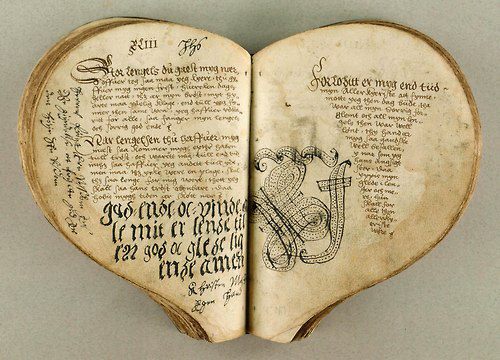
Danish “Heart Book”

Closed, it is a question
mark missing the finality
of the dot that holds
its fragile curve in place,
half of what it could be.

Opened, a great yearning
lives in the curlicue of each letter,
yellowed pages burdened by the black
ink of a centuries-old plea: for misery
to end and turn into good.

After that, two other poems I had jotted down in my journal and on my iPhone finally started to take shape on the page. Now I feel like I’m back on track.


2 Comments

14 Words, One Love


For the last week, I’ve been supporting my fellow double-life poet, Jodi Barnes, in her effort to collect 1,400 14-word love poems to distribute on Valentine’s Day. The first day, I wrote one poem, but since then I’ve written no less than three poems each day and as many as six! The 14-word challenge has been a great way to build up to a daily writing practice, strengthen the mind-paper connection, and focus on crafting concrete imagery.

I’ve written a series of poems, “to understand love / you must understand <blank>,” where I fill in the blank with an object or concept and then find seven other words that both describe the object and the idea of love. Here are some examples:

to understand lovegenes

you must understand genes

their endless patterns

uniting, splicing, reforming, reborn

to understand lovedogs

you must understand dogs

waiting by doors, tails wagging

in anticipation

to understand love

you must understand rings

encircling delicate fingerssaturn_false

and all of Saturn

to understand love

you must understand teatea

slow sips of honey

warming your hands

I haven’t counted them yet, but I have three typed pages of the “to understand love” series, and about six 14-word free form poems. Every evening I come home eager to prepare the next day’s patch of poems, and every morning I wake up excited to post what I’ve written and watch the number count creep closer to the goal. Most importantly, I am having fun while supporting a worthwhile effort to spread love throughout the Triangle.

Try your hand at a 14-word love poem by leaving a comment.


Leave a comment

Inaugural Poem: “One Today” by Richard Blanco


"Of, By, For" ~ Photo by Jean Christian

“Of, By, For” ~ Photo by Jean Christian Rostagni

Richard Blanco’s inaugural poem, “One Today,” chronicled a day in the life of average Americans, which for many of us center around our jobs. The poem heralds those who “clean tables, read ledgers, or save lives,” as well as people like Blanco’s Cuban immigrant father who hands were worn from “cutting sugarcane so my brother and I could have books and shoes.” The poem intermingled Blanco’s personal experience with the typical American experience, subtly making the point that the demographics of our nation have become more diverse. The last stanza of “One Today” carried the theme of Obama’s inaugural address that “Now, more than ever, we must do these things together, as one nation, and one people.”

We head home: through the gloss of rain or weight
of snow, or the plum blush of dusk, but always—home,
always under one sky, our sky. And always one moon
like a silent drum tapping on every rooftop
and every window, of one country—all of us—
facing the stars
hope—a new constellation
waiting for us to map it,
waiting for us to name it—together.

Bravo, Poet Blanco!

The full text of the poem can be found here.


Leave a comment

Poets Speak Out on the Connecticut Tragedy


Rock Me MercyIn the wake of the tragedy in Connecticut, I’ve found no words to express the sadness I feel for the young lives violently taken out of this world, the caring adults who tried in vain to protect them, and the families who now experience unspeakable grief and pain as a result of this horrible event.

Fortunately, other poets have. I’m sharing a few of the poems here:

Rock Me Mercy by Yusef Komunyakaa

Hi Mommy (my first haikuby wolfman  

 An Essential Journey Back to Light by Nicolas Cable

 Crumble Life Poem #48 by Christopher Poindexter


Leave a comment

Poems Every Day


Conversation with my friend, J, in her kitchen on Wednesday night:

JH: How many poems do you read a day?

PT: Only two. Writer’s Almanac and the daily poem from Poets.org. I read those on my phone.

JH: That’s it?

PT: Oh wait! I changed my email settings for the Library of Congress Poetry 180 project. I used to get the weekly digest, but I get those poems every day. Or whenever the government sends them out.

J continues potting her winter bulbs.

PT:  Well, it does depend on the day. The American Life in Poetry poem comes on Mondays. And then on Wednesday, there’s the Linebreak poem. This week’s poem was great. Let me read it to you:

PT reads “The Centurion Divulges More

PT:  Oh yeah, I’ve got the Poetry Daily app on my phone. They post a new poem everyday, but sometimes I don’t remember to check and end up reading a week’s worth of poems on the bus.

JH: Is that it?

PT: Well, there’s always whatever poetry book I’m reading now.


4 Comments

iPhone Poetry


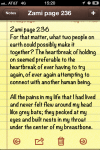
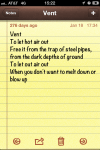
Every once in a while I forget my journal or a pen or I don’t have room in that cute purse that goes with the tango dress to fit paper and pen. But I always have my iPhone. Recently, I scrolled through the Notes app and found dozens of poem first drafts, book quotes, as well as lines and phrases that might one day find their way into a poem. I’m sharing a few here:


2 Comments

Ekphrastic Poetry


For me, art is a constant source of inspiration. I walk through museums and galleries with a petite notebook and matching pen in my back pocket to catch whatever comes to mind. When I look at a work of art—be it a painting, photography, sculpture, or mixed media—I try to imagine myself inside the piece, either as the subject or the person observing the scene. For example, here’s what I wrote in response to this photo of fireworks:

Spark

Photo by Katia Singletary Art and Photography

One hand gropes
in the dark
and finds its match.
Now fingers intertwine
like stacked wood
transferring heat
from pressed palms
to wrapped arms,
pulling closer
and closer.
Then lips touch
and the miracle
of fire burns slow
through hips and toes.
Embers of shared
breath rise until reds,
purples, and golds bloom
and burst into fiery
chrysanthemums.

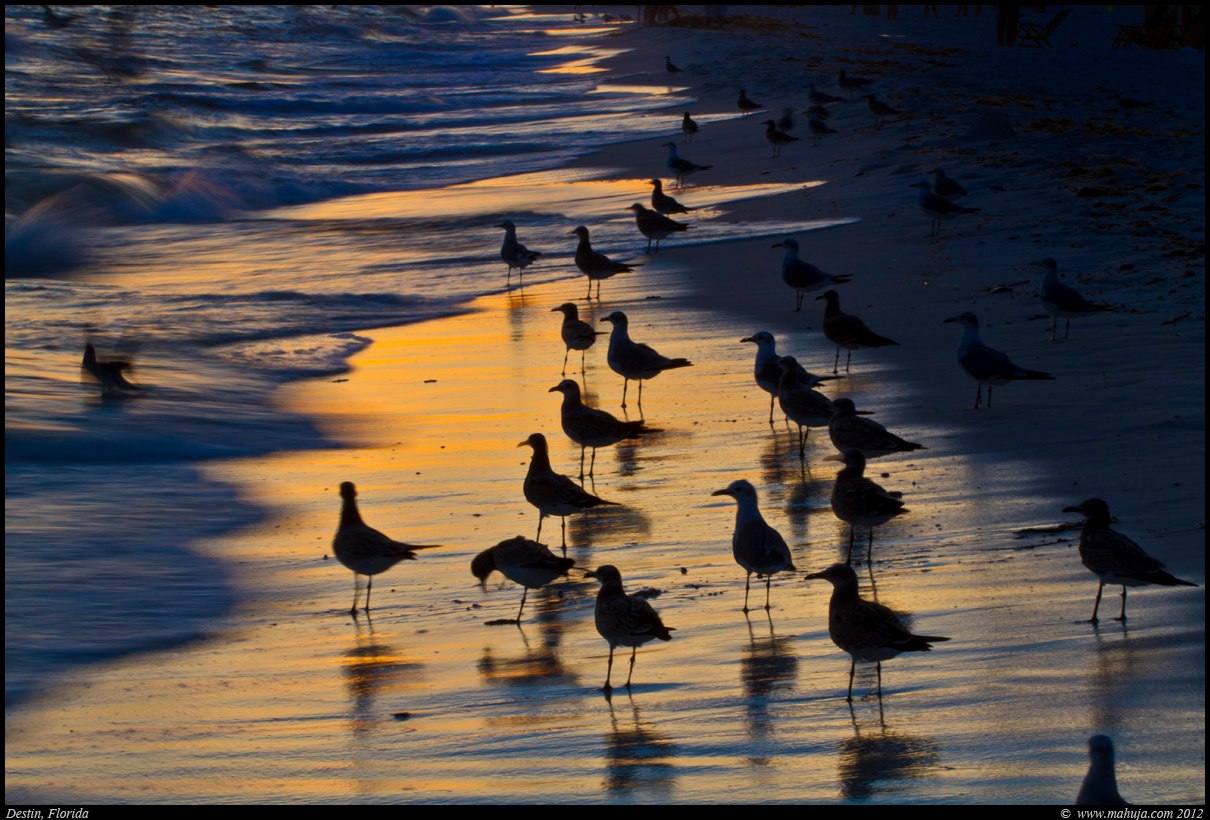
I like photography because a photo is literally a snapshot of a moment, which goes along with the narrative elements of the poems I write. Former North Carolina Poet Laureate, Cathy Smith Bowers calls this, “shining a light on a moment in time.”

Photo by Manish Ahuja

As a poet, I have complete freedom to choose which moment to feature. The unseen creatures are the focus of this haiku:

The receding tide
leaves sand crabs bare on the shore
Raucous seagulls snack

A good ekphrastic poem should be able to stand by itself—without the requiring artwork to provide the context. At the same time, the poem should complement the artwork, enhance the meaning of the scene beyond what you can experience just by looking at it. Here’s a poem inspired by the well-known painting, The Sleeping Gypsy (read the poem and then visit the painting).

The Sleeping Gypsy

And now she sleeps—
stretched—with her water jug
nearby and the moon standing
guard overhead. I’ve stalked her
wandering scent in the desert heat,
beheld her bedazzling garments
as if a rainbow wrapped its arms
around her dark beauty. The mandolin
silent, but still singing her deep
alto into my jaws, my paws. I long
to be that instrument—what she wants
near, what her arms can hold.

Special thanks to photographers, Manish Ahuja and Katia Singletary, for granting permission to use their work.


3 Comments

Three Minute Poet


A few weeks ago, I ran into Jan Parker sitting at a crowded bar right before the Erotic Poetry and Burlesque show started. After exchanging the usual long time no sees and you’re looking mighty fine tonights, Jan cut to the chase and asked the question I dread the most, “Are you writing?” Most people ask how is my writing, and I can satisfy their curiosity with a simple, “Fine.” If pressed for more specifics, I can always rattle off my litany of poem ideas to fend them off. But this was another writer asking me the question, and more importantly, Jan Parker, who has a finely tuned BS meter. So I told her the awful truth, “No, not really,” then gave her the run-down of my September–poetrySpark (of course) and the weeks of planning before the event, the upcoming football trip to Charlotte, and the wraparound weekend in Myrtle Beach with mom and then to Atlanta for a professional conference. And I did not fail to mention my day job and the 8 projects pulling me in exactly that many directions.

Jan held up a finger then dismissed my excuses with the shake of her salt and pepper mid-length bob, “You only need three minutes a day.”

“Three minutes?” I repeated incredulously. Three minutes is about how long it takes to write a poem on demand. Even I could do that. And maybe that would make me feel less guilty about not finding the 15 minutes in my day to write (as a former MFA advisor once suggested) or being able to get up earlier than the crack of dawn like Mary Oliver.

In the interest of full disclosure, I have not written for three minutes every day, but there has been at least one time each week when I’ve found time to put pen to page. Here are a few good lines:

September 18th: We used to believe that pluck and determination could shatter glass faster than our silent screams of protest

September 24th: The hall is dark, save a strip of light on the floor. When my eyes focus, my ears hear the music of laughter and clinking glass

September 29th: The ocean talks in his sleep at night in rhythmic murmurs

I’ve even used the three minute time to write poems in response to the Monday Poetry Prompt I send out each week to the Living Poetry Meetup Group

Visual prompt (9/24): From here the earth looks like the globe on your father’s mantle–perfectly round and unmovable

Borrowed lines (10/1): And the kiss that drained all of the bitter cynic from my blood


These poems and lines are not “finished”, but the three-minutes-a-day mantra keeps the creative juices flowing and helps to maintain the proper balance in the double life.


3 Comments

A Few of My Favorite Work Poems


My last post featured a recently published poem about real-life work experience. As a double-life poet I often am influenced by what I hear, see, and feel during the work day. At times I am able to lend a poetic voice to the white collar bureaucratic office environment that occupies 8+ hour chunks of my weekdays. However, there are times when what I write about work just sounds like I’m  venting without really elevating  the topic to the universal. When I have trouble finding the poetic in the mundane, I turn to some of my favorite work poems to inspire me.

Philip Levine “What Work Is“: Levine’s award-winning collection of the same name pays homage to factory workers. The title poem is the quintessential work poem about the loneliness and powerlessness felt by a day laborer that just expands to include the unspoken love for his brother.

“How long has it been since you told him
you loved him, held his wide shoulders,
opened your eyes wide and said those words,
and maybe kissed his cheek?”

Where much of Levine’s work poems focus on blue collar stiffs, poems in the collection, For a Living: Poetry of Work, features poems about white collar jobs. Two of my favorite poems in this anthology are Denis Johnson’s sonnet “White, White Collars

“We work in this building and we are hideous
in the fluorescent light, you know our clothes
woke up this morning and swallowed us like jewels,
and ride up and down the elevators, filled with us”

and Wanda Coleman’s lament about life as a medical billing clerk, “Drone

“i am a clerk
i am a medical billing clerk
i sit her all day and type
the same type of things all day long
insurance claim forms
for people who suffer chronic renal failure”

Lastly, Jan Beatty’s “My Father Teaches Me to Dream.” The final lines say it all.

“There’s no handouts in this life.
All this other stuff you’re looking for—
it ain’t there.
Work is work”

Ok I realize most of these poems don’t portray work in the best light, so I promise I’ll post some feel good work poems soon. If you know of any, feel free to leave a comment!