A Poet's Double Life

For poets working outside the literary world.


3 Comments

Year in Review 2012


2012 YIR

I’m taking a page from the playbook of my poet-friend and blogging guru, Tara Lynne Groth of WriteNaked, and doing the hip thing: a post what I learned and accomplished this year.

What I learned is simple: Write! Write! Write! Submit! Submit! Submit! ‘Nuff said.

Now—on to the month-by-month highlights of 2012

January: Graduated from Vermont College of Fine Arts with my MFA in Writing.

February:  Participated in peer review with fellow VCFA alum. Made 2nd presentation for the job.

March: Worked like crazy. Not much else. 😦

April: Wrote 30 poems for April Poem-A-Day Challenge. Turned 40!

May: Attended Raleigh Review writing workshop with Dorianne Laux and Joe Millar. Made 3rd presentation for the job.

June: Attended 17th Cave Canem Retreat.

July: Launched this blog, Poet’s Double Life.

August: Attended a professional conference in Chicago, wrote poems, and took tons of photos.

September: poetrySpark! “Professional Disagreement” published in Mused: BellaOnline Literary Review.

October: Worked like crazy and got an “exceptional” annual performance rating. Attended a new open mic.

November: 29 poems for November Poem-A-Day Challenge. Five years at the job!

December: Three April poems published in the Best of Fuquay-Varina Reading Series anthology. “The Truth About Fire” accepted in Pedestal Magazine’s December 2012 edition.

I’m still working on my New Year’s resolutions for an upcoming post!


I’ve blogged about work poems and how work experiences influence my poetic subjects. But a recent article in Harvard Business Review discusses how poetry has a positive influence on the personal and professional development of business professionals by:

  1. Teaching us to wrestle with and simplify complexity.
  2. Helping to develop a more acute sense of empathy.
  3. Developing our creativity.
  4. Teaching us to infuse life with beauty and meaning.

Sounds like lessons we all need to learn.

Read the full article here: http://blogs.hbr.org/cs/2012/11/the_benefits_of_poetry_for_pro.html

Special thanks to double life poet, Anna Weaver, for sending me this article.


4 Comments

Lessons Learned from the November Poem-a-Day Challenge


For the past three years, I’ve done the poem a day challenge for National Poetry Month in April. But at Cave Canem , I learned about 30-for-30–writing a poem a day in the months with 30 days (April, June, September, and November)—and decided to give it a try.  Here are a five things from this experience:

 #1:  November is a good month for the challenge. It is far enough away from April (sorry, June) and not crazed with poetrySpark like September. Also, doing a PAD challenge in November is a show of solidarity with my prose-friends attempting to write 50,000 words in a during NaNoWriMo—National Novel Writing Month. I’ve decided to do the challenge in April and November from now on.

 #2:  It is impossible to do a PAD challenge alone: Although I was only one among my local poet-friends doing the PAD challenge out of season, I discovered that the Poet Laureate of Rockland Maine was doing the challenge too. Also the numerous Facebook comments and email responses to the poems reminded me there were people who appreciated that I was writing poems—no matter the month.

 #3:  I don’t need prompts: Unlike the April PAD Challenge, I didn’t follow the Poetic Asides blog. Doing a challenge without prompts meant that I had to be open to the inspiration coming from anywhere: a photograph, an email from a friend during her vacation, or a story I heard

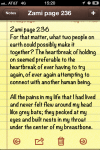
IPhone Poem "At the Bottom of Mercury"

IPhone Poem “At the Bottom of Mercury”

on NPR. When I got stuck, I cultivated those seeds in my poetry notebook, scrolled through my iPhone notes, and found the time to write 5 poems from the list of poems I needed to write. It felt good to finally bring these ideas to life on the page. Now I have something to revise.

 #4: I need to trust that a poem will come out. So much went on this month: the first week of November, my mind was preoccupied with the Hurricane Sandy aftermath in my hometown; the second week, a close friend of the family died and my mother and I attended the funeral; the third week, I caught a cold and had no energy for much of anything; and last week I had a good friend visiting from LA and spent almost every night out. Not to mention that Mercury went retrograde from November 6th-26th, making any form of communication that much more difficult. And I still managed to write a poem every day! You’d think I would have learned this lesson by now, but obviously I needed this experience to become a true believer.

 #5:  I need to share my poetry more: Typically I post the daily poem to my Facebook notes (which can be hard to find if you don’t know where to look) and send it via email to about 30 family and friends who don’t use Facebook. I’ve tended to keep the poems slightly hidden in case I want to publish them later. But I’m having a change of heart. Out of the poems I write during the challenge, I submit about 6 or 7 and they go through extensive revision before I send them out. I’m starting to so I feel okay about posting them to a wider audience, so come April, I will also post the poem-a-day here.


1 Comment

The Poetry Stacks


One of my favorite writing spaces in the Triangle also houses an excellent collection of literary magazines—UNC’s Davis Library. The 1st floor periodicals section is a labyrinth of metal shelves surrounded by over-sized chairs in soft yellow, green, and plaid hues. The room is flooded with light from the floor-to-ceiling windows on two sides of the room. Every month or so I walk down an aisle and grab literary journals from their cold homes and carry as many as my arms can hold to a sunny spot by the front window.  (FYI – Such reading is best done with a dark chocolate mocha from Caribou Coffee).

Here is where I was introduced to the work of Adrienne Su, Victoria Chang, and Jan Beatty. Here is where I fell in love with Alberto Ríos’ “A Small Story about the Sky”, which inspired me to write a poem in response, “The Truth about Fire”

You’ve heard the story about the sky––/ how fire burned it black / and kept a little piece of blue. / If only the story were that simple: a fire growing into its power / and then the poor sky consumed/ by all those flames.

“After the First Shot” by Saeed Jones appeared in West Branch Issue 69

I am always surprised to see the work of poets I know.

And I make sure I bring quarters or dollar bills for the photocopier, so I can bring some of my favorites home.


Leave a comment

Poems Every Day


Conversation with my friend, J, in her kitchen on Wednesday night:

JH: How many poems do you read a day?

PT: Only two. Writer’s Almanac and the daily poem from Poets.org. I read those on my phone.

JH: That’s it?

PT: Oh wait! I changed my email settings for the Library of Congress Poetry 180 project. I used to get the weekly digest, but I get those poems every day. Or whenever the government sends them out.

J continues potting her winter bulbs.

PT:  Well, it does depend on the day. The American Life in Poetry poem comes on Mondays. And then on Wednesday, there’s the Linebreak poem. This week’s poem was great. Let me read it to you:

PT reads “The Centurion Divulges More

PT:  Oh yeah, I’ve got the Poetry Daily app on my phone. They post a new poem everyday, but sometimes I don’t remember to check and end up reading a week’s worth of poems on the bus.

JH: Is that it?

PT: Well, there’s always whatever poetry book I’m reading now.


Leave a comment

What I’m Reading Now


A summer reading list was way too ambitious for me. I finished the Penguin Anthology of Twentieth Century American Poetry last week for the November book club. I did manage to read a few of the other books on the list: Zami: A New Spelling of My Name (Audre Lorde), City of a Hundred Fires (Richard Blanco), and Life on Mars (Tracy K. Smith). I started Toi Derricotte’s Undertaker’s Daughter, but quickly learned that it is not the kind of poetry book I can read in a sitting or two. Each poem packs a punch. I’m still waiting for the smelling salts to revive me. In the meantime, I devoured This is How You Lose Her by Junot Díaz, which wasn’t even on the original list, which I read on my Kindle, which I will probably read again before the year is over.

Instead of making a list, I’m just going to share what I’ve been reading lately.

Thrall by Natasha Trethewey: Many of the poems are based on paintings or photographs (and you know how much I love ekphrastic poetry). We’re reading it for the December book club. I’ve got the “Poet Laureate of the United States” hardcover edition.

Circle and Salvinia Molesta by Victoria Chang: Found one of her poems while searching through the new literary magazine issues in the stacks. Picked up her books – ‘nuff said. Well actually, I’ll say this: “I’ve never told her I have a hidden talent / for loving men with only three chambers / in the heart, his salted lips / iron aftertaste of an imagined kiss.” (from “Holiday Parties”)

One for the Money: The Sentence as Poetic Form edited by Gary Young and Christopher Buckley: This book is an anthology of sentence poems as well as a manual of how to write them. Here’s one of my attempts

Longing is like this

Peeling off gloves
pressing flesh against
winter bare trees
trying to feel
for life
beneath cold skin

The Stories of Vladmir Nabokov & Nabakov’s Dozen: Nabokov’s imagery and attention to detail are making me swoon. A poet can’t help but be inspired by sentences like this: “I can see her now, in her black sealskin coat with a big, flat muff and gray fur-trimmed boots, walking on her slender legs, as if on stilts, along a very slippery sidewalk; or in a dark, high-necked dress, sitting on a blue divan, her face heavily powdered after much crying.”

Let me know what you’re reading by leaving a comment.


2 Comments

Critique Groups


When I first started writing, I shared poems with a few friends who appreciated the written word. After they read it and said it was good, I added the poem to the rest of my collection on my hard drive.  I was writing for myself, to express the feelings and memories that silenced my tongue. When I declared myself a poet, I somehow realized I had a duty to share what I wrote. But more than that, I wanted to make my poems better–though at the time I had no idea what that meant.
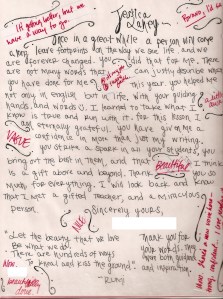
The Living Poetry Sharing Creativity workshop was the first time I had ever had my poems read by strangers. I found it helpful to hear my poem read in someone else’s voice, understand the places where the reader was confused or moved, and consider other possible directions to take the poem. After I finished my MFA, I found myself looking for a group to help me review and revise poems I wanted to send out for publication. At first, I joined a group that exchanged poems on a weekly basis via email, but found it difficult to keep up with the pace. Also without seeing the poet’s reaction, it was difficult to gauge whether the feedback I had provided was helpful. Fortunately some of my female poet-friends formed a face-to-face group that meets monthly and know I feel I have a safe place to test drive my poems.

Here are a few observations that I think make critique groups work:

Having structure for sharing feedback: A common structure for feedback starts with reading the poem twice, by someone other than the poet and then by the poet herself. Participants provide positive and negative feedback to the poet, trying not to repeat what someone else has said. Most of the time, the poet remains silent until all feedback is shared. Then the poet is allowed to ask questions or react to the feedback. Whereas our monthly group doesn’t follow this structure exactly, we’ve all been in enough workshops to know the usual process and that helps moves things along.

Working with poets whose work you like and whose feedback you trust: Most of the women in my monthly group have known or known of each other for years through poetry events in the Triangle. I’ve read or heard their work and always look forward to seeing what they are working on.

Commit to meeting on a regular basis: My monthly critique group is full of busy women who are balancing custody arrangements, teenager activities, business travel, and long-distance relationships along with everything else in our lives. But we manage to work around everyone’s schedule to find dates and time that work (Doodle helps!)

Sharing more than poems: A critique group is a place for us to connect as poets, share our successes and challenges, be supported by people who have responded to the same call.

Let me hear about your experiences with critique groups by leaving a comment.


4 Comments

When Life Happens


It’s been almost two weeks since I’ve posted on the blog, two weeks since Hurricane Sandy devastated the part of New York City where I grew up – The Rockaway Peninsula. Like many others in the Rockaways, my family did not evacuate this time. Last year they took shelter in Brooklyn after heeding the warnings about Hurricane Irene, who didn’t do much damage to the boroughs, opting to spread her flooding elsewhere. But as we all know now, Sandy was no Irene.

After waiting it out for 5 days and hoping the electricity and heat would return, my family found a hotel in Manhattan to spend the first weekend—a welcome respite from the disorder and cold. But as the Sunday checkout was approaching, the worry about where they would go to be safe and warm returned. By Tuesday things were settled, my mother and sister had voted, and they found a place to say in Brooklyn for the immediate future.

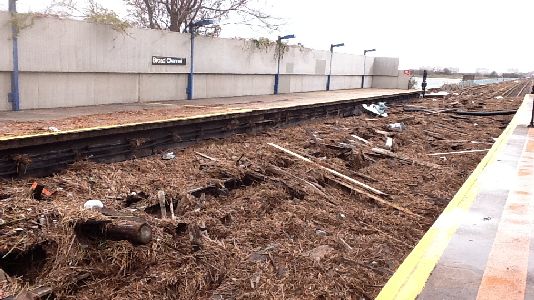
The situation in the Rockaways is still this: no power, no heat, no subway service. And by the look of this photo of the Broad Channel station—the stop that connects the Rockaways to the rest of Queens—it doesn’t look like the situation will change any time soon.

I couldn’t do much from North Carolina, but I did manage to check my mother’s AOL account and respond to the people who were concerned about her. I kept my phone beside me at all times in case someone managed to send out a text update before battery life expired. I followed Bob Hardt’s blog on NY1.com, an account of the Rockaway’s slow recovery.

In the midst of this I did write poetry—started the November Poem a Day challenge in fact—but that was all the writing my mind could handle. This week at work, I started writing sections of a report, which forced my brain to fire up neurons in Broca’s and Wernicke’s areas, and started me thinking I needed to get back to this blog.  So here I am!


1 Comment

My Poet’s Notebook


Most of my poems were born in a 4.3 X 6 inch Picadilly wire-bound journal I bought for $4.99 in the bargain section of Barnes and Noble. I used to have separate notebooks—one for thoughts, one for dreams, and sometimes a third for my to-do lists—but I’ve consolidated to one notebook for my entire life because everything is connected, isn’t it? I’ve saved over 30 notebooks, going back to 1999, though I didn’t always write in them on a regular basis. And of course, I’d love to say I write daily, but the reality is that I don’t. However, I bring my notebook everywhere, just in case a thought falls out and needs a safe place to land.

My current journal contains sayings of Buddha on every page as well as notes from my Spanish conversation class, three-minute poems, and the poems I need to write but haven’t finished. It’s also the vehicle to carry around photos, letters, and printouts of poems I’ve read at open mic events. A lot of what my notebooks contain may never become poems, they are the filler helping me to write my way to the next idea.

When I was in my MFA program, I came to the page with the expectation that what I was about to write would become a poem. With a packet of 3-5 poems due each month, I felt pressure to make every word count. Working full-time, I felt I couldn’t waste any thought, that every thought must eventually become a poem or else! Fortunately, my 3rd semester adviser, Sascha Feinstein, gave me this advice:

“Consider everything in your notebook to be seeds, and understand, too, that seeds need time to grow.”

Now I approach writing in my notebook as being just that—writing in my notebook. With what I learned about my writing process, I know there are good poems living in those pages even if I have to go back 2 or 3 notebooks to find them. What’s most enjoyable is reading about the events going on in my life around the poems, seeing the context in which each poetic thought grew, and understanding what might have influenced this word or that image.


4 Comments

iPhone Poetry


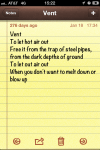
Every once in a while I forget my journal or a pen or I don’t have room in that cute purse that goes with the tango dress to fit paper and pen. But I always have my iPhone. Recently, I scrolled through the Notes app and found dozens of poem first drafts, book quotes, as well as lines and phrases that might one day find their way into a poem. I’m sharing a few here: