A Poet's Double Life

For poets working outside the literary world.


12 Comments

My Mother’s Child: A Chapbook


11402606_10206120537869576_2450195489782527196_oMy chapbook is finally here, My Mother’s Child published by Hyacinth Girl Press. In my last post, I promised to share the details of this amazing journey.  Although some of these poems were written almost four years ago and about 10 months elapsed from signing the publication contract to publication date, it’s really felt like a serendipitous labor of love.

  1. The Poems. I can trace the origins of some of these poems back to 2011 in my second semester at VCFA. I wrote other poems at two Cave Canem retreats, in response to a visual prompt at my weekly writing group, Written Word, and a workshop through the Raleigh Review. I know many of these poems started as hunks of stone scribbled in my notebooks while commuting on the DRX bus and were later revised during my times at UNC Davis Library (aka The Poet’s Gym). Six poems were previously published; five in 2013 and one in an anthology published in 2014.
  2. The Chapbook. Assembling chapbook is different than putting 3-5 poems together for a journal submission or workshop application packet. The poems have to speak to each other and belong together. After a year of submitting to contests for full-length collections and getting nowhere, I changed my strategy. When I sat down to look at all the poems, they seemed to separate themselves into two groups with a few bridge poems. Depending on the chapbook contest guidelines, I included more or fewer poems. I probably had 3 or 4 different configurations.
  3. The Contest. I entered My Mother’s Child into the Imaginary Friend Press chapbook contest in 2013. I liked this contest because it was specifically for anyone who did NOT identify as a heteronormative white male. Although I was a finalist for this contest, one of the judges, Margaret Bashaar, asked to publish the chapbook through her small press, Hyacinth Girl Press. This could not have happened if I didn’t enter contests and submit my work.
  4. The Cover Art. This amazing sketch was done by a local artist, Jolmar Millar (4th photo). I met Jolmar at a tribute event for Maya Angelou I emceed in November 2014. When Margaret gently nudged me about cover art, it took a while before I thought of Jolmar. And then when she came to mind, I didn’t have her email address. I emailed a mutual contact for Jolmar’s email address and the email went to spam. Then about a month later we were connected.
  5. The Publication Process. This process is no joke, and being a newbie, I didn’t know what to expect. There comes a point where you have to let go. Having a wonderful publisher and layout person helps. I still don’t think I caught everything, so don’t be too hard on me if you find something.

Here’s an excerpt from a poem that started out as an image I couldn’t get out of my head while driving to a poetry-on-demand event at Cloer Family Vineyard in April 2012. The first draft was written at Cave Canem in June 2012.

What makes sense disappears
under straw hats,
this bizarre America,
where they pay
to return to rural
roots my people fled—
that second Exodus
to auto plants, steel mills,
city-hard streets—
so I wouldn’t
have to stand in sweat
tasting the dry,
salted past
on my tongue.– Stuff White People Like #132: Picking Their Own Fruit, from My Mother’s Child – See more at: http://hyacinthgirlpress.com/yearfive/mymotherschild.html#sthash.q08uIMgj.dpuf


3 Comments

May Days


hs-2011-11-a-xlarge_300I had to rest up after writing all those April poems for the Poem-a-Day Challenge. It took 3-4 days before I could read the poems, and I have to say, I’m quite happy with the result. During the challenge, I can’t spend time with each poem because I’ve got to crank out another one. So having the time to step away and come back to what I’ve written helps me see each poem in a new light. There are quite a few that I want to work with so they can be sent out for publication this summer and fall.

With the true arrival of Spring, I’m getting out more. The NC Museum of Natural Sciences invited the poets back on the last day of April to write poems in response to a science talk about the Hubble Telescope. I also debuted some of the April poems at a Sunday brunch with the girls at the home of my tango friend and photographer, Katia Singletary and  at the Open Mic at Johnny’s Gone Fishing in Carrboro. I resumed my Tuesday poetry dates with the Two Writers Walk Into a Bar reading with Duncan Murrell and Liana Roux. The Murrell piece follows pyrotechnicians (yes, the people who set fireworks), so I can’t wait to go to Davis Library and read it in the Virginia Quarterly Review.

Also, ahead this month—the release of my new chapbook, My Mother’s Child from Hyacinth Girl Press. It’s been an amazing experience working with this small press and I can’t wait to share the details of this journey.


2 Comments

Poet Resolutions 2015


Old typewriter with paperOf the five poet resolutions I made last year, I accomplished four:

  • Teach a poetry workshop: As I suspected, the Living Poetry co-organizers kept me on task. I taught a Revision Toolbox workshop in September.
  • Spend more time with poets: My last post showed that I knocked this resolution out of the park–VCFA Puerto Rico residency, AWP in Seattle, my last Cave Canem retreat, poetrySpark, poetry dates, and the NC Writer’s Network conferences, just to name a few.
  • Start a poetry project: I’m hesitant to even say that I started a project because that would make it real. But I can’t stop thinking about dark matter/dark energy. So far, I’ve written one poem that I consider to be part of the collection. I started one-on-one lessons in physics to help me understand the connections I want to make with outer space and earthly phenomenon.
  • Published 7 poems: The goal was 6, but I was fortunate to have seven poems published in 2014; 5 solicited and 2 as part of an anthology

I made an earnest effort on the other  resolution as well:

  • Organize 1 out of 3 poetry readings: I organized the Science Cafe again in May, but completely forgot about my goal of organizing three.

I’m not feeling particularly ambitious, so I’m sticking with three resolutions for 2015.

Six poems published: I was lucky to publish one poem over of this goal. But I haven’t written much since June, so I’m hoping this resolution will nudge me into the part of the cycle where I’m writing and submitting again.

Write at least three poems for my poetry project: I have a few ideas that need to find their way onto paper and this resolution will help me keep focused on the dark matters project.

Go to a poetry retreat or writer’s residency: I’d like to to find another retreat to have some undivided writing time. My poet friend Cynthia Manick seems to find one every year and keeps track with deadlines on her infamous spreadsheet.

What are your poetic goals for 2015? Feel free to share them in a comment.


3 Comments

The Meaning of May


Historic-Gdn-04842-WH-ws


And a bird overhead sang Follow,
  And a bird to the right sang Here;
And the arch of the leaves was hollow,
  And the meaning of May was clear.


It’s been almost a month since the last post. The April 2014 Poem-a-Day Challenge left me very weary from writing poems – and in fact – from reading a lot of poetry. My first order of business was to bury myself in a novel, Kinder than Solitude by Yiyun Li. Also, I finally got around to reading books that have been on my shelf for quite some time: Autobiography of an Ex-Colored Man by James Weldon Johnson and The Best American Short Stories 2006. Don’t get me wrong, I did write some poems that were commissioned for a birthday. I wrote five poems, sent four, the person liked two, and I printed one poem as the gift.

For me, May went by in one big fog. I spent most nights curled up on the couch, watching TV shows on Hulu or movies on Netflix. I didn’t have the energy to be creative or do much of anything else (my poor house). After so much output in April with writing poems and attending poetry events, the introvert in me needed an equal amount of solitude and sloth to balance everything out. The funny thing about not doing much is that life and creativity keep moving, even when the only thing I wanted to do was take a nap. For example, four poems from the April PAD Challenge found homes; one will appear in the upcoming “Knowing” issue of When Women Waken and the others will be featured in a future Come Closer post at Luna Luna Magazine. On May 1st, I granted Outrider Press permission to publish two poems in the next TallGrass Writers Guild anthology, “The Mountain.”

The stanza from Algernon Charles Swinburne’s poem, “An Interlude” stood out because the meaning of May was clearly this: even when it looks like I’m doing nothing, something is still happening.


1 Comment

Getting into the Poetry Swing


baseball_pitch_132901After a conversation with my good poet-friend, Victorio Reyes at AWP, I’ve decided to get out of my publishing comfort zone. My usual strategy is to spend a lot of time reading and considering literary magazines before I submit, then narrow down to the 10 or so places that I think I have the best chance of getting published. I’ve had pretty good success with this method—6 publications last year when I submitted to 10 or 12, or about a .500 batting average.

Victorio suggested that I take broader approach–apply to the places I would typically rule out or right off for one reason or another. In fact, he follows the Matthew Dickman philosophy of having 50 pieces out there at any given time. This advice seems totally daunting to me because I feel have enough good poems for a chapbook (15-30 pages), but not a full-length collection (at least 48 pages).


The baseball equivalent of this strategy would be stepping up to the plate and taking a swing. Although, I’m definitely an outcome driven person, this new philosophy on publishing has had a positive effect thus far because it forces me to:

  • find new and different literary magazines where I can submit;
  • go deeper into my poem files to revisit and revise old poems; and
  • write more poems.

I don’t know if this approach will increase my success with publishing, but I’m willing to give it a shot.


Sharing an interview I did with Ian Bodkin of Written in Small Spaces where I talk about  my how I became a poet, my writing process, balancing the wissliterary and non-literary career, and functioning somewhere between Wally (Wallace Stevens) and Willy (William Carlos Williams).

http://writteninsmallspaces.com/2014/01/18/episode-16-the-hunk-of-stone-with-pamela-l-taylorand-erica-wright-disguises-her-weaponry/


10 Comments

Poet Resolutions 2014


2014Of the six poet resolutions I made last year, I accomplished four:

  • Publish six poems: In 2013, seven poems were published
  • Share my poetry: April and November poems appeared on the blog.
  • Talk to more double life poets: This year I spent time with double-life poets and prose writers, including Tracey Gratch, whose poem I found while reading a scientific article for a work project.
  • Blend double lives more: In addition to listing poems on LinkedIn, I read a few poems during my birthday celebration at work. During the travel for the work project I lead, several people had checked me out and inquired about the MFA.

This year’s resolutions are not too different.

Teach a poetry workshop: This goal was on last year’s list, but I didn’t find the courage or time to do it. This year, the co-organizers of Living Poetry have mapped out a series of poetry workshops, including two workshops on revisions and publishing your work that I volunteered to teach/co-teach.  The LP organizers are good about keeping me on task.

Organize three poetry readings: Last year, I organized two poetry readings for the weekly Science Café at the NC Museum of Natural Sciences. The museum has agreed to making this reading an annual event. So now I have to find two other opportunities to organize a reading in 2014.

Six poems published: This goal worked last year, so I’m keeping it on the list. This goal requires me to write and submit, which is always the struggle as a double-life poet.

Spend more time with poets: When my work project picked up steam in July,  I had a more difficult time finding time to spend with poets. Sure I  helped to organize poetrySpark in September and was a featured reader at the West End Poetry Festival in October, but I barely saw poets in the last two months of the year.  So I think spending time with poets at least once a month is a good way to operationalize this goal.

Start a poetry project: I have no idea what this goal means or what it will look like. It may blend my love of science with my love of poetry. It may mean collecting work poems or poems by double-life poets. We’ll see!

What are your poetic goals for 2014? Feel free to share them in a comment.


7 Comments

Double the Life, Double the Accomplishments


UNC_PhotoAfter writing poems for 30 days, I had to shift gears to focus on the work side of this double life. In fact the work project I was leading was a constant in the backdrop of September’s poetrySpark, the November poem-a-day challenge, and poetry submission deadlines. As hard as I worked on my poems on Sunday afternoons in the office at the library, I worked equally hard–if not harder–in writing a report for work. And finally, it has culminated in a presentation before a state legislative committee on operational efficiency within the University of North Carolina system (check out the video clip from News 14 and the write-up on WRAL).

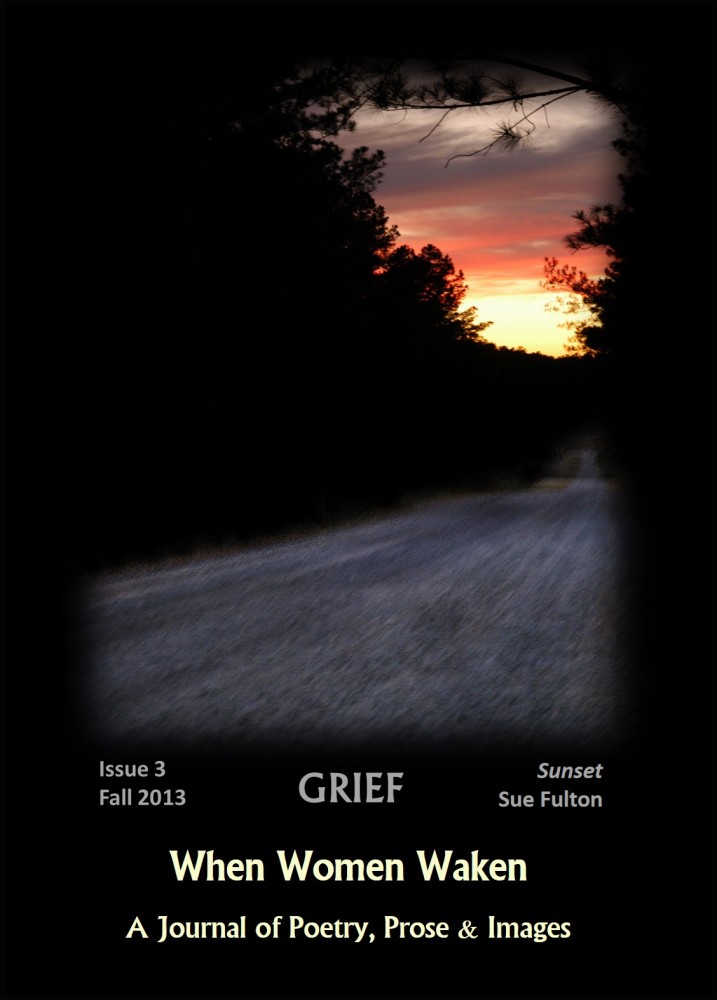
griefissueIn true double-life fashion, this work accomplishment is accompanied by a few poetic accomplishments: submitting a chapbook to two contests and getting two poems published in the Grief Issue of When Women Waken, including the Day 5 poem of the November 2013 PAD challenge.

Times like this is why I love the double life!


8 Comments

Sunday in the Office with Poems


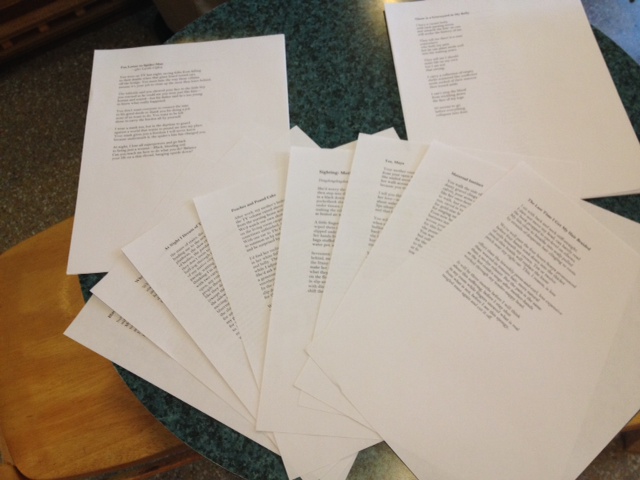
For three straight weeks, I’ve spent Sunday afternoons in a small office on the 4th floor of UNC Davis Library. I’m thankful for this space and for my generous German friend who keeps the key to his faculty study in a place where I can find it. This is why America should maintain the trust of our German allies.

Typically, I spend about 5 or 6 hours there revising some poems, writing blog posts, researching literary magazines and book publishers or a little bit of all of the above. Yesterday’s goal was to assemble the 10-36 pages of poems that could possibly become a chapbook. Last week’s session whittled down the bulk of my writing to 43 pages, which completely covered the limited desk space. Then coffee arrived and chatting ensued, leaving the poems to talk amongst themselves.

Poems need this time to get to know each other, figure out how to arrange themselves, and decide whether to be part of the group. Forty-three pages became 27, including the four that called out to be revised in the middle of the process for a literary journal submission. Some of the poems in the Group of Twenty-Seven may not make the final cut. I see two distinct themes and about eight poems that bridge these ideas but are not wedded to either camp. And so the process continues.

The Group of Twenty-Seven


3 Comments

Back to Business


opensignThe end of the government shutdown coincided with the end of writing a report for work. Now I have more time to turn my attention back to the business of poetry. Like any job—double life or otherwise—some tasks  you love and other tasks you tolerate as necessary evils. For me, submitting work to literary magazines and contests is  on the necessary evil side of things. It’s a lot of work for little (if any) reward and the process is never-ending:

  • Search for places to publish
  • Read published work to get a sense of how my work fits
  • Read and re-read submission guidelines
  • Print out potential poems to submit
  • Read, revise, and tweak selected poems
  • Order selected poems
  • Re-re-read submission guidelines
  • Prepare submission packet (cover letter/bio and poems)
  • Submit packet (and payment, if required)
  • Hope and pray

Last year, I focused on getting individual poems published and was successful. I’m still working that angle and adding chapbook contests to the mix. I have quite a few poems, but not all of them are ready for prime time. So selecting 10-30 of my better poems for a chapbook seems less daunting. Here are the chapbook contests on the horizon:

  1. Sunken Garden Chapbook Poetry Prize (10/31): co-sponsored by Tupelo press; 20-36 pages judged by Mark Doty 
  2. Coal Hill Review (11/1): co-sponsored by Autumn House Press; 10-15 pages judged by Michael Simms
  3. Minerva Rising Chapbook Contest (12/1): themed contest, “Daring to be the Woman that I Am;” 12-15 pages judged by Rosemary Daniell 
  4. Imaginary Friend Chapbook Contest (12/15): open to anyone who doesn’t identify as a straight, white male; 12-20 pages judged by Shane McCrae, Ching-In Chen, Margaret Bashaar, Noel Pabillo Mariano, and Ayshia Stephenson